World Bank has warned that court case could derail Nigeria’s $500 million power recovery programme.
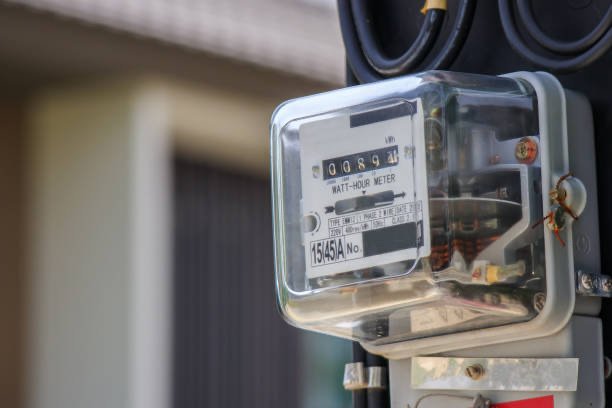
NewsOnline Nigeria reports that the legal dispute initiated by local electricity meter manufacturers is threatening to derail Nigeria’s $500 million World Bank-funded Distribution Sector Recovery Programme (DISREP), with the lender warning that the procurement of 1.55 million smart meters could be cancelled if the matter is not resolved.
The warning was contained in the World Bank’s latest Implementation Status and Results Report for the Nigeria Distribution Sector Recovery Programme.
According to the report, the programme continues to record steady implementation progress and currently maintains a “Moderately Satisfactory” performance rating. However, the court injunction obtained by the Association of Meter Manufacturers of Nigeria (AMMON) has emerged as the project’s biggest implementation risk.
The World Bank noted that the programme was upgraded from a “Moderately Unsatisfactory” rating six months ago following improvements in implementation but warned that the ongoing litigation could reverse that progress.
ALSO: Tinubu Government Secures $1.5 Billion From $5 Billion UAE Financing Deal to Refinance Debt
The report disclosed that AMMON secured a court injunction on April 30, 2026, preventing the opening of bids for the International Competitive Bidding (ICB2) procurement process covering 1.55 million additional smart meters.
According to the association, the procurement framework unfairly sidelines Nigerian meter manufacturers and assemblers, undermining local industrial development.
“The most significant implementation risk at present is the court injunction obtained by the Association of Meter Manufacturers of Nigeria (AMMON) on April 30, 2026, which has halted the opening of bids for the procurement of 1.55 million additional smart meters (ICB2),” the World Bank stated.
The report revealed that the Transmission Company of Nigeria’s Project Management Unit has extended the bid submission deadline three times, with the latest deadline fixed for June 25, 2026, while consultations continue among relevant government agencies.
However, the World Bank warned that if the legal dispute persists, authorities may have no option but to cancel the procurement exercise altogether to avoid further uncertainty, rising costs and implementation delays.
The report also disclosed that contracts for the local procurement of 217,000 smart meters through National Competitive Bidding have reached an advanced stage after receiving observations from the Attorney General of the Federation.
However, the Bureau of Public Enterprises (BPE) has linked the signing of the contracts to the resolution of the court injunction obtained by AMMON.
Despite the legal setback, implementation under the programme’s first international procurement phase continues to make significant progress.
As of June 15, 2026, approximately 1.23 million smart meters had been manufactured, with 1.03 million already shipped to Nigeria.
Out of the shipped meters, about 482,000 have been installed across the country, representing a notable increase from the 365,000 installations recorded during the programme’s mid-term review in April.
The World Bank also noted that recent directives issued by the Nigerian Electricity Regulatory Commission (NERC) are expected to accelerate meter deployment by electricity distribution companies.
The programme has also contributed to the Federal Government’s Mission 300 initiative by providing electricity access to approximately 530,000 Nigerians, with the number expected to increase as installations continue.
Operational indicators contained in the report showed gradual improvements across Nigeria’s electricity distribution sector.
The country’s metering gap has narrowed to 57.27 per cent, while billing efficiency has improved to 82.02 per cent.
Weekly implementation reports also showed customer meter installations rising to 379,380 from about 265,000 earlier this year, while direct electricity connections increased to 418,033 beneficiaries.
In addition, more than three million electricity customers have been mapped under the Geographic Information System (GIS) initiative against a long-term target of nearly 13 million customers.
Financial data contained in the report showed that only $87.34 million has so far been disbursed from the $500 million World Bank facility, representing approximately 17.5 per cent of the total funding.
Meanwhile, under the programme’s results-based financing component, the Bureau of Public Enterprises has commenced the phased transfer of the $37.5 million advance released by the World Bank in December 2025 to electricity distribution companies.
The report added that preparations for an additional $308 million financing package are progressing, with the concept note already completed and peer-reviewed as the World Bank awaits approval to move to the next review stage.
Approved in February 2021, the Nigeria Distribution Sector Recovery Programme is designed to improve the financial and operational performance of electricity distribution companies and is expected to run until May 2028.
The World Bank’s latest warning underscores the growing importance of resolving the legal dispute quickly to prevent another setback in Nigeria’s efforts to modernise its electricity distribution network and close the country’s metering gap.