ADVERTISEMENT
  • About Us
  • Advertise
  • Contact Us
  • Privacy Policy
Monday, June 22, 2026
NewsOnline Nigeria
  • Headlines
  • Top Stories
  • Politics
  • Crime Watch
  • Entertainment
  • Sports
No Result
View All Result
  • Headlines
  • Top Stories
  • Politics
  • Crime Watch
  • Entertainment
  • Sports
No Result
View All Result
NewsOnline Nigeria
No Result
View All Result
  • Headlines
  • Top Stories
  • Politics
  • Crime Watch
  • Entertainment
  • Sports
ADVERTISEMENT
ADVERTISEMENT
Home Africa

South Africa Xenophobic Attacks as a Challenge to African Brotherhood By Gabriel Akinlade-Daniel

by NewsOnline Nigeria
May 11, 2026
in Africa, Opinion
0
South Africa Xenophobic Attacks

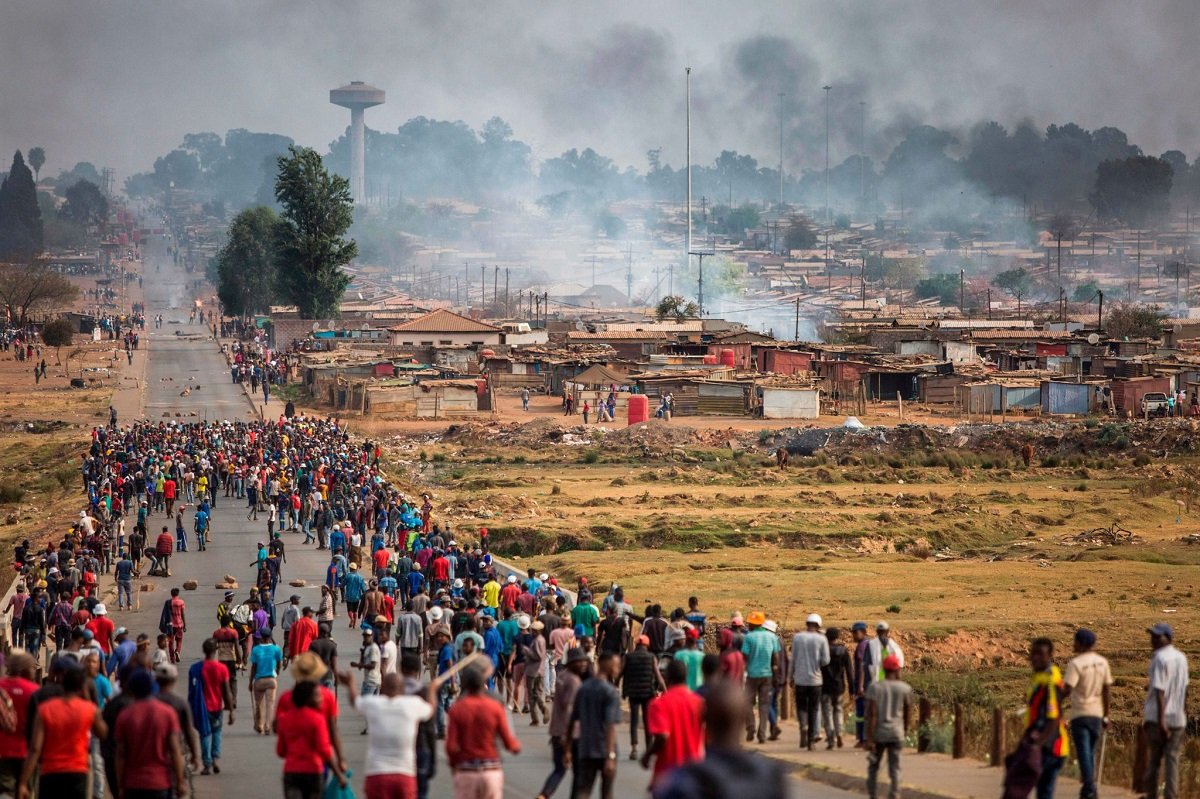
For more than two decades, South Africa has experienced repeated outbreaks of violence aimed mainly at immigrants from neighbouring countries and other parts of Africa. Critics have argued that political violence around immigration and deep economic frustrations fuelled the hostility towards foreign nationals, leading to many being beaten, killed, displaced, and their businesses looted. After the end of the apartheid regime in 1994, South Africa became a major attraction for immigrants from other African countries, seeking to work there. Many arrived from neighbouring countries that faced economic recession, conflicts, and political repression at a time when South Africa is struggling with employment, inequality, and increasingly poor services.


In 2019, when violence swept through parts of Johannesburg and Pretoria, at least 12 people were killed, and hundreds of businesses were looted or destroyed. Nigeria evacuated more than 500 of its citizens from South Africa as these attacks triggered a diplomatic crisis. Tensions around immigration have remained high, particularly against the backdrop of South Africa’s escalating economic crisis.


ALSO: Foreign Affairs Minister Bianca Ojukwu Breaks Silence On South Africa Xenophobic Attacks


A fresh outbreak of violence in 2026 triggered protests from leaders in Nigeria, Ghana, and neighbouring African countries, with renewed criticisms of South Africa’s handling of Xenophobia. According to Nigeria’s Foreign Minister, Bianca Odumegwu-Ojukwu, “Nigerian lives and businesses in South Africa must not continue to be put at risk.” Nigeria also raised the issue and offered to repatriate its citizens back home amid fears of attacks. Moreover, in the face of these xenophobic tantrums, Ghana’s government wrote to the African Union. In the letter, Ghana said that what it called xenophobia in South Africa “presents a challenge to the shared principles of African solidarity, brotherhood and continental unity,” asking the continental body to discuss the issue, which it says is a serious risk to the safety and well-being of African in South Africa. Similarly, Kenya, Malawi, Lesotho, and Zimbabwe have also warned their citizens in South Africa to be on the lookout for possible attacks.


It is unfortunate that blacks and African immigrants, who make up more than two-thirds of South Africa’s estimated 3 million foreign immigrants, are frequently targeted as scapegoats for their structural problems. Many observers have warned that South Africa’s problem with xenophobic violence has become a recurring decimal, always surfacing whenever economic or political pressures arise. This reveals how hardship can quickly be turned to hostility. No doubt that the xenophobic violence in South Africa reveals a complex interplay between socio-economic deprivation, group conflicts, and violence. In the midst of this violence, the official South African government response to Xenophobia and related problems has been characterised by a lack of political will, denials, and impunity of the actors involved.


However, what is required in the face of this xenophobic violence is that only a sustained state political will, informed by accountability, rule of law, and eradication of impunity can help prevent xenophobic violence or at least mitigate its effects. But if the South African government failed, it could hinder the principles of African solidarity, brotherhood, and continental unity.


Previous Post

Drug Abuse on Campus: Killing the Future Before It Even Begins By Festus Edovia

Next Post

Adeleke Deposes Apetu of Ipetumodu Over $4.2m US COVID-19 Fraud Conviction

Next Post
Apetu of Ipetumodu

Adeleke Deposes Apetu of Ipetumodu Over $4.2m US COVID-19 Fraud Conviction

Trending Stories

South Africa Xenophobic Attacks

South Africa Xenophobic Attacks as a Challenge to African Brotherhood By Gabriel Akinlade-Daniel

Caleb University Female Student Leaked Sextape Goes Viral, Sparks Social Media Frenzy (Watch Here)

Balthazar Video Telegram

Balthazar Video Telegram: Watch All 400 Balthazar Engonga Sex Tapes Here

Balthazar Video Telegram

Direct Link To Watch All Baltasar Engonga 400 Videos With Government Officials Wives

Sex Tape

President 50-Year Old Daughter’s Sex Tape Breaks The Internet (WATCH HERE)

Watch Viral Sex Video of Anambra Married Woman

Watch Viral Sex Video Of Anambra Married Woman With Husband’s Best Friend

Baltasar Engonga Wife Video Knacking Another Man

Watch Full Baltasar Engonga Wife Video Knacking Another Man [#BaltasarEngonga]

US Presidential Election Result

BREAKING: First US Presidential Election Result Emerges

CAC

CAC Login Portal for Fee Business Registration – www.pre.cac.gov.ng

Ifunanya Lawyer Biography

Ifunanya Lawyer Biography, Photos, Nudes Videos, Age, Instagram, Controversy

Latest Stories

Festus Edovia

Who’s Afraid of Free and Fair Elections in Nigeria? By Festus Edovia

APC

APC Dominates By-Elections in Enugu, Kano, Ondo, Nasarawa, Kebbi as PDP Retains Rivers Seat (FULL LIST)

Biodun Oyebanji

BREAKING: INEC Declares Biodun Oyebanji Winner of Ekiti Governorship Election 2026

Seun Oyediran

Why Access to Structured Merchant Financing Matters for SME Growth – Seun Oyediran

Former Petroleum Minister Diezani Alison-Madueke

BREAKING: UK Court Clears Former Petroleum Minister Diezani Alison-Madueke of Bribery Charges

Festus Edovia

Politicians Must Stop Deceiving the Poor Masses By Festus Edovia

Leadership

Nigeria’s Poor: Abandoned to Suffer, Left Behind by Leadership By Festus Edovia

Festus Edovia

Executive Power to Loot, But No Will to End Poverty, Insecurity, and Unemployment – Festus Edovia

Polaris Bank

Polaris Bank Strengthens Financial Literacy Campaign, Trains Katsina Students on Smart Money Management

CapitalSage Vantage

CapitalSage Vantage Signs Deal to Acquire Chimoney, Expanding Cross-Border Payments Network

NewsOnline 2026

Get the Latest Naija News, Breaking News, Top Stories, World News, Business, Politics & Entertainment from NewsOnline Nigeria.

RELEVANT PAGES

  • About Us
  • Advertise
  • Contact Us
  • Privacy Policy

ALERT US

Important Press Releases, Special Investigations: admin@newsonlineng.com

OFFICE ADDRESS

13 Poland Street, London, United Kingdom (UK)

Copyright © 2026 NewsOnline Nigeria

No Result
View All Result
  • Headlines
  • Top Stories
  • Politics
  • Crime Watch
  • Entertainment
  • Sports

Copyright © 2023 Newsonline Nigeria