Defence Minister has stated that Sambisa forest’s vast size delaying rescue of kidnap victims.
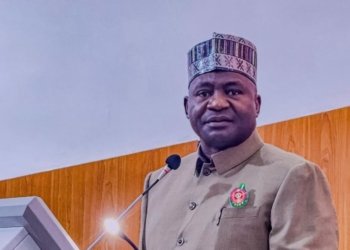
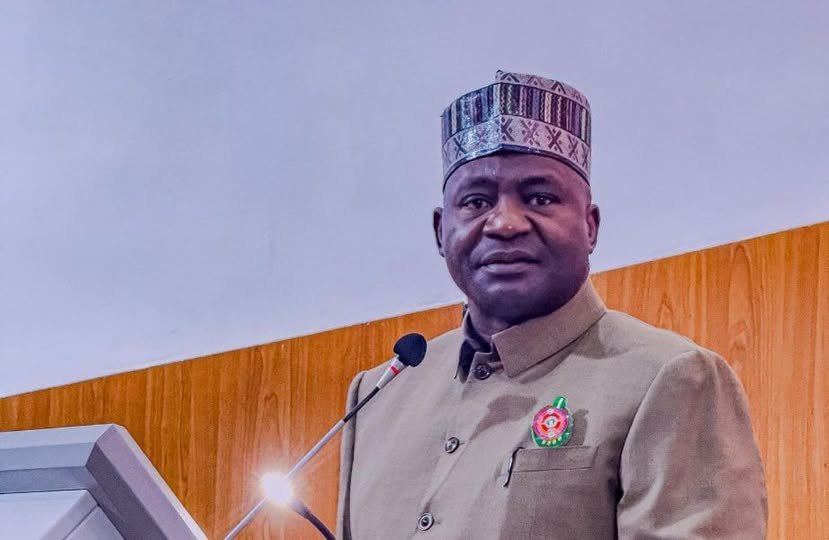
NewsOnline Nigeria reports that the Minister of Defence, General Christopher Musa (retd.), has attributed delays in rescuing some victims of terrorism and kidnapping to the vast size and difficult terrain of forests used as hideouts by criminal groups.
Musa said the expansive nature of the Sambisa Forest and other forest corridors across Nigeria allows terrorists and kidnappers to evade security forces after carrying out attacks.
The minister spoke during an interview on Channels Television’s Politics Today, where he discussed the Federal Government’s efforts to combat terrorism, kidnapping and other security threats.
According to him, security agencies are rescuing abducted Nigerians regularly, but locating victims quickly remains challenging because kidnappers often retreat deep into forests before information reaches troops.
“Few ones now, efforts have been made. If you notice, on a daily basis now, we are really getting, rescuing a lot of them,” Musa said.
ALSO: FTSE Russell Index Inclusion Lifts Nigerian Stocks as NGX Investors Gain ₦239bn
“So, this government is overwhelmed. Sambisa Forest is as big as Belgium, as a country. So, when people talk about this, they make it look as if it is one small football field and we are refusing to do anything.”
Musa explained that similar forest corridors extend across national boundaries, creating additional operational difficulties for security forces attempting to track criminal groups.
“These places are massive areas. The forest within Kwara comes in from Burkina Faso to Benin Republic into Nigeria and flows through all these things,” he said.
“So, what they do is that once these abductions are done, before the information gets to anybody, these guys are already into the forest.”
The former Chief of Defence Staff said troops sometimes have to block terrorists’ escape routes and access to supplies before kidnapped victims can be rescued.
He cited a recent security operation in Kwara State, during which troops reportedly restricted the movement of the abductors and intensified pressure on them.
“The last one that was done in Kwara State, we had to quarantine where they were going, deny them oxygen, and that’s where we were able to get them,” Musa said.
According to the minister, terrorists sometimes abandon their captives when sustained military pressure disrupts their movement and access to essential supplies, creating an opportunity for security forces to recover the victims.
Musa also disclosed that authorities were monitoring financial transactions suspected to be connected to kidnapping and other criminal activities.
He said ransom payments could provide intelligence capable of helping security agencies trace kidnappers and identify their wider financial networks.
The minister added that the Central Bank of Nigeria was involved in efforts to monitor suspicious financial flows linked to criminal operations.
Musa further advised state governors and lawmakers to reconsider the distribution of high-capacity motorcycles as palliatives, warning that some of the vehicles could eventually fall into the hands of terrorists.
He said motorcycles provide criminal groups with greater mobility, enabling them to enter remote communities, conduct attacks and escape through difficult terrain.
“If you are to give, don’t give them the big-capacity motorcycles. Give them the small-capacity ones that they won’t be able to use to run around because that gives them leverage,” he said.
Despite the operational challenges, Musa maintained that security forces were making progress against terrorist groups and rescuing kidnapped victims across the country.
He said attacks by Boko Haram and the Islamic State West Africa Province had reduced, although criminal groups were increasingly turning to kidnapping and abduction to raise funds.