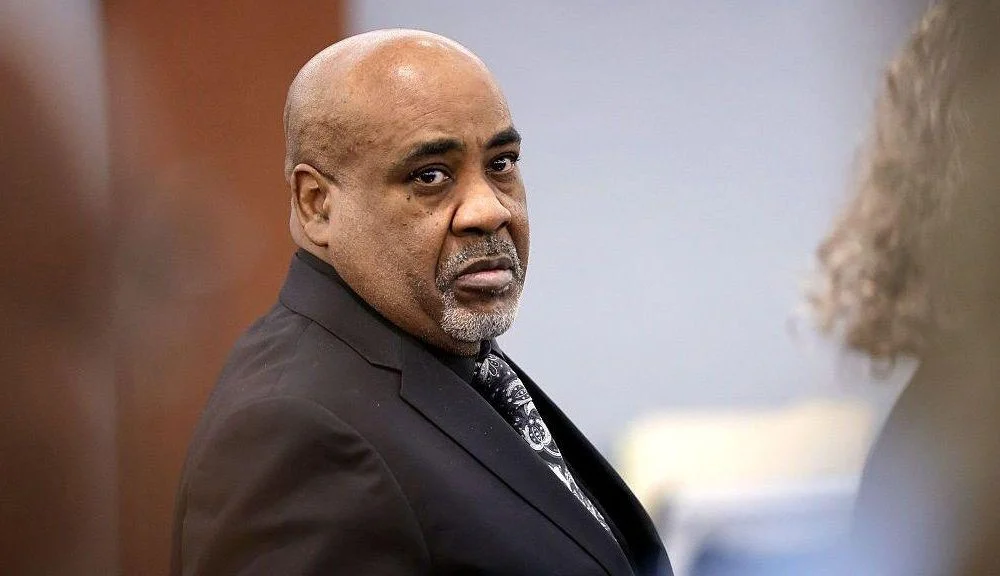
Duane ‘Keffe D’ Davis has been found guilty of Tupac Shakur’s 1996 murder.
NewsOnline Nigeria reports that Former South Side Compton Crips leader Duane “Keffe D” Davis has been found guilty of orchestrating the 1996 murder of legendary rapper Tupac Shakur, bringing a measure of resolution to one of hip-hop’s most notorious killings.
A 12-member jury in Las Vegas unanimously convicted the 63-year-old of first-degree murder with a deadly weapon after deliberating for less than three hours.
The verdict is the first conviction recorded in the case nearly 30 years after Shakur was fatally shot in a drive-by attack near the Las Vegas Strip.
ALSO: Access Bank Under Fire as Customer Alleges Mysterious Disappearance of ₦3m Savings
Davis, who pleaded not guilty, could be sentenced to life imprisonment without the possibility of parole. His sentencing has been scheduled for October 13, 2026, according to Reuters.
After the verdict was delivered, Davis informed the judge that he planned to appeal.
The decision prompted emotional scenes inside the courtroom. Shakur’s sister, Sekyiwa “Set” Shakur, was seen crying and later embraced members of the prosecution team, while Davis’ son covered his face with one hand.
Prosecutors built much of their case around statements Davis made during interviews, conversations with investigators and in his 2019 memoir, Compton Street Legend.
In those accounts, Davis acknowledged that he was inside the white Cadillac from which the shots were fired and said he supplied the weapon used in the attack.
Prosecutors argued that despite inconsistencies in Davis’ accounts over the years, one crucial detail remained unchanged, his presence in the vehicle involved in the shooting.
Chief Deputy District Attorney Binu Palal told the jury that Davis acquired a firearm and assembled a group to search for Shakur following a confrontation involving his nephew, Orlando “Baby Lane” Anderson.
The defence argued that Davis’ statements were exaggerated acts of bravado intended to promote his memoir and raise his public profile. His lawyers also maintained that the claims were not sufficiently supported by independent evidence.
The jury rejected the defence’s argument and found Davis guilty of orchestrating the attack.
Prosecutors said the shooting was carried out in retaliation for a fight earlier that night between Shakur’s entourage and Anderson at a Las Vegas casino.
Evidence presented during the trial showed that Shakur and members of his entourage had assaulted Anderson following a Mike Tyson boxing match.
Davis later joined three other men in a white Cadillac to search for Shakur and Death Row Records co-founder Marion “Suge” Knight.
According to the prosecution, Davis handed a firearm towards the back seat of the vehicle before the group found Shakur and Knight.
Shakur was riding in the passenger seat of a BMW driven by Knight when the white Cadillac pulled alongside them at a red light on September 7, 1996.
A gunman inside the Cadillac opened fire, striking Shakur several times and injuring Knight. The rapper died from his injuries six days later at the age of 25.
Prosecutors did not establish the identity of the person who fired the fatal shots. However, under Nevada law, they were not required to prove that Davis personally pulled the trigger to secure a murder conviction for his alleged role in organising the attack.
The other three men who prosecutors said were inside the Cadillac have since died.
Shakur’s stepbrother, Mopreme Shakur, had expressed cautious optimism ahead of the verdict but acknowledged that no court decision could fully deliver the justice his family desired.
“The justice I would like, I’ll never get. I want my little brother back,” he said.
Shakur’s murder became one of the defining events of 1990s hip-hop, occurring during intense tensions associated with the East Coast-West Coast rap rivalry.
The rapper was one of the most commercially successful and influential artists of his generation and was closely associated with Death Row Records.
For decades, no one was charged over his death, fuelling widespread speculation, conspiracy theories and conflicting accounts of the shooting.
The case changed in 2023 when Davis was arrested and charged with murder following years of public statements about his involvement.
The trial began on August 17 and featured testimony from dozens of witnesses, alongside hours of recorded conversations.
The conviction closes a major chapter in the decades-old case, but with Davis vowing to appeal and the identity of the actual gunman still officially unresolved, the legal battle surrounding Tupac Shakur’s murder is not over.