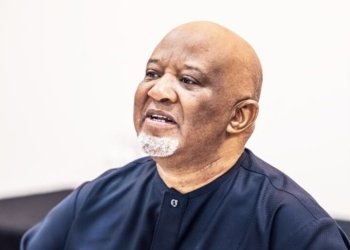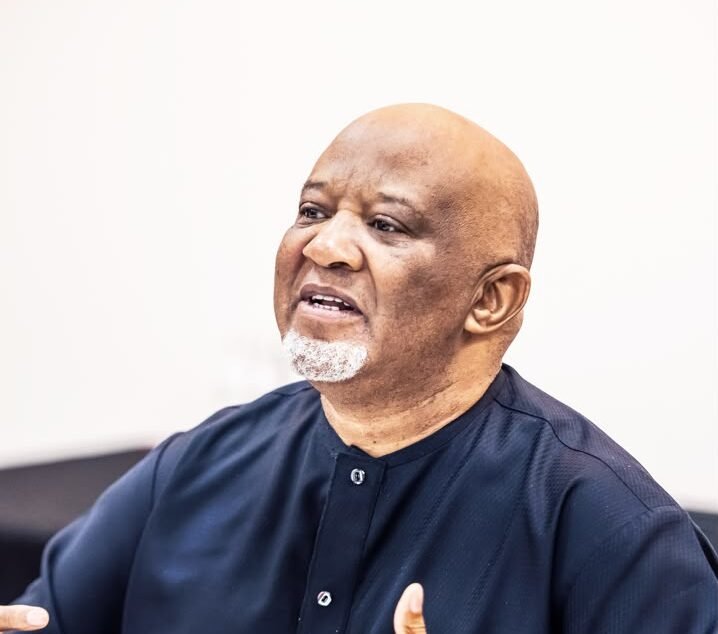
MTN Chairman Mcebisi Jonas has blamed South Africa’s Xenophobia on government failure.
NewsOnline Nigeria reports that the chairman of MTN Group, Mcebisi Jonas, has condemned the growing wave of anti-foreigner sentiment in South Africa, blaming the country’s governance failures rather than immigrants for its socioeconomic challenges.
Jonas made the remarks during the funeral service of Zimbabwean-born activist and public servant Thokozani Damasane in Johannesburg, where he urged South Africans to reject xenophobia and embrace African unity.
His comments come amid renewed concerns over attacks targeting foreign nationals, including Nigerians, Zimbabweans, Mozambicans and other African migrants, as well as calls by anti-immigration groups for foreigners to leave the country before June 30.
ALSO: World Bank Warns Court Case Could Derail Nigeria’s $500 Million Power Recovery Programme
Addressing mourners, Jonas argued that blaming foreign nationals for South Africa’s unemployment, inequality and crime merely diverts attention from the country’s deeper structural problems.
“Foreigners can leave tomorrow, inequality will be with us. Foreigners will leave tomorrow, unemployment will be with us. Foreigners will leave tomorrow, our police will remain corrupt,” he said.
According to the MTN chairman, South Africa’s challenges stem from failures in governance, including poor border management, weak law enforcement and inadequate public service delivery.
“The problem is the failure of the state. The state doesn’t manage immigration. It doesn’t manage its borders. It doesn’t enforce law enforcement. It doesn’t manage education,” Jonas stated.
He warned that economic hardship has made many citizens vulnerable to politicians who exploit public frustration by using foreign nationals as scapegoats instead of addressing the root causes of the country’s problems.
Jonas also criticized tribalism and ethnic nationalism, describing them as divisive forces that continue to undermine Africa’s unity and development.
He argued that colonial rule institutionalized tribal divisions across the continent and that modern political actors continue to exploit identity politics for electoral advantage.
“The tribe is a product of colonial powers,” he said, urging South Africans to reject ethnic nationalism in favour of a broader African identity.
Emphasizing the importance of regional cooperation, Jonas said South Africa’s future is closely tied to the prosperity of the African continent.
“We are a nation embedded in Africa. South Africa is nothing without Africa. And Africa is nothing without South Africa,” he said.
Given MTN Group’s operations in 19 countries across West, East and Southern Africa, Jonas stressed that cross-border cooperation and regional stability remain vital to Africa’s economic growth.
He also insisted that individuals should never be judged based on their nationality or place of birth.
“We cannot judge people by their origin. We cannot determine the legal status of people by their origin,” he said.
Reflecting on the life of the late Thokozani Damasane, Jonas described him as a symbol of African solidarity.
Born and educated in Zimbabwe, Damasane relocated to South Africa after the end of apartheid and dedicated much of his life to community development and public service.
Jonas said Damasane’s life demonstrated that true identity is defined by one’s values, contributions and commitment to society rather than one’s country of origin.
“He immersed himself deeply into the struggles, into the pains of South Africans, and he became one of us,” Jonas said.
The MTN chairman’s comments come days after MTN Group President and Chief Executive Officer, Ralph Mupita, warned against growing calls in parts of Africa to boycott pan-African companies, saying such actions could undermine youth employment, digital transformation and the goals of the African Continental Free Trade Area (AfCFTA).