Nigerian Workers has written to President Tinubu, demanding N500k Minimum Wage.
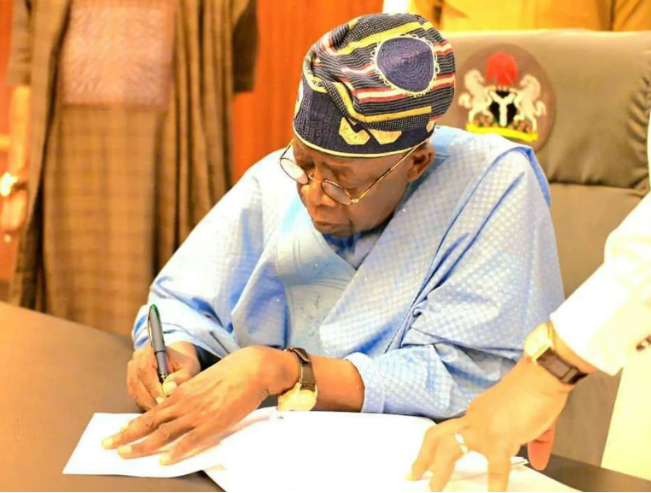
NewsOnline Nigeria reports that Nigerian workers under the aegis of the Joint National Public Service Negotiating Council (JNPSNC), Trade Union Side, have written President Bola Tinubu, demanding urgent measures to address the worsening economic hardship confronting workers across the country.
In a letter addressed to the President, the workers called on the Federal Government to stabilise the price of petrol at N500 per litre, approve an immediate wage award and review salaries and allowances across the public service.
They also demanded the immediate constitution of a committee to negotiate a new National Minimum Wage of N500,000, ahead of January 2027.
ALSO: Trump Asks Americans to Vote on New Name for Artificial Intelligence
The workers said the recent increase in petrol prices to N1,430 per litre and above in some locations had further aggravated the cost-of-living crisis and placed additional pressure on workers and households.
The JNPSNC gave the Federal Government until Wednesday, September 30, 2026, to take concrete action on its demands, warning that the prevailing economic hardship was creating palpable tension among workers and Nigerians.
According to the workers, the removal of fuel subsidy three years ago triggered a sharp rise in petrol prices, with multiplier effects on the cost of transportation, food and other essential commodities.
They argued that the distribution of food palliatives was not a sustainable solution to the economic challenges facing Nigerians.
“It has dawned on Nigerian workers that the provision of palliatives such as bags of rice, Indomie, vegetable oil, garri, among other edible foods, is as good as weaponising Nigerians with poverty because it is a Pyrrhic intervention which is unsustainable, inaccessible to the majority of Nigeria’s population and also limited to political cronies,” the workers said.
The workers maintained that reducing the price of petrol to N500 per litre would provide a more sustainable intervention, arguing that lower fuel costs would have a multiplier effect on transportation, food prices, production and other areas of the economy.
They therefore urged President Tinubu to urgently intervene and address their demands before the September 30 deadline.