What if everything we are fighting for is ultimately nothing more than an elaborate preparation for a grave we will never own?
The question may sound disturbing, even uncomfortable. But death has a way of stripping life of its illusions.
We arrive on this earth without our permission. We grow, struggle, acquire wealth, pursue power, build houses, accumulate possessions, seek recognition and sometimes destroy one another in the process. Then, suddenly, without negotiation or warning, we disappear.
Just like that.
The body is lowered into the earth, the spirit departs, and the person who once occupied that body becomes a memory. The world continues. Businesses operate. Governments function. Families eventually learn to live with their loss. Those who once wept uncontrollably gradually return to their daily routines.
ALSO: Life Is A Loan, Not A Possession: Remember, It Must Be Returned By Festus Edovia
Life moves on as though the person were never here.
So, what exactly is this earthly existence?
Sometimes, I see human beings as strangers temporarily living in a land they mistakenly believe they own. We speak of “my house,” “my money,” “my property,” “my position,” “my power” and even “my life,” as though we have permanent ownership of any of them.
But what do we truly own?
The wealthiest person cannot purchase an additional hour when death comes knocking. The most powerful politician cannot legislate against death. A billionaire cannot bribe the grave. A celebrated entertainer cannot negotiate for one more breath. The poor and the powerful eventually stand before the same mystery.
Death is the great equaliser.
It does not care about titles.
It does not recognise political parties.
It does not respect bank balances.
It has no sympathy for human ambition.
Perhaps the greatest irony of existence is that we spend our entire lives moving closer to the grave.
Every heartbeat is part of a countdown. Every birthday is not merely an addition to our age; it is also a subtraction from the time remaining to us. Yet, we celebrate as though we are moving further away from death.
We are not.
We are moving towards it.
I have watched people leave this earth without saying goodbye. Some departed suddenly, leaving unfinished conversations, unanswered questions and loved ones who never had the opportunity to say “I love you” one final time.
One moment, someone is laughing with you.
The next moment, they are gone.
No farewell.
No final handshake.
No last conversation.
No opportunity to resolve yesterday’s misunderstanding.
Then comes the silence.
Religions have attempted to explain this great mystery. Some speak of reincarnation; others speak of heaven and hell, resurrection and eternal life. We are told that death is not the end and that those who depart in faith will one day meet again.
Yet, one of the most profound questions humanity must confront remains this: Are these promises glimpses of a reality beyond death, or are they consolations for frightened human beings struggling to understand the apparent finality of existence?
I do not claim to have the answer.
Perhaps no living person can claim complete knowledge of what lies beyond death.
Faith gives many people certainty where reason reaches its limits. Philosophy offers questions where certainty remains elusive. Science explains much about the physical body, but the mysteries of consciousness, existence and what may lie beyond death continue to challenge humanity.
Perhaps that uncertainty is itself a lesson.
It should make us more careful about how we live.
Why should we spend our brief earthly existence deliberately hurting one another? Why do we destroy relationships because of money? Why do people kill for power? Why do some steal public resources meant to serve millions? Why do we humiliate the poor simply because we possess more than they do?
Why do we behave as though we will live forever?
Nigeria offers a painful illustration of this human contradiction. People fight desperately for political power, public office and access to wealth as though these things confer immortality. Public resources are looted or mismanaged while citizens struggle to survive. Individuals accumulate fortunes they could never consume in one lifetime, sometimes at the expense of millions whose lives are diminished by poverty.
For what?
The grave does not have a bank account.
The cemetery has no political party.
The coffin has no luggage compartment.
The dead have no use for the wealth they spent their lives accumulating.
Perhaps our greatest failure is not that we will die, but that we often discover the value of life only when death is standing at the door.
We wait until someone dies before speaking about how good they were. We wait until the coffin arrives before remembering their kindness. We wait until the grave is dug before realising that the quarrels, grudges and bitterness we carried against them were meaningless.
Why wait?
Tell people you love them while they can still hear you.
Forgive while there is time.
Apologise before the opportunity disappears.
Help someone while you are still capable of helping.
Be kind—not because the world is always kind, but because your time here is painfully short.
We are all tenants in this earthly dwelling.
Some remain for 90 years. Some for 50. Some for 20. Others do not have the opportunity to reach adulthood.
Regardless of the length of the tenancy, however, the Landlord eventually comes for the keys.
When that day arrives, nothing we accumulated will accompany us.
Not the mansion.
Not the title.
Not the political influence.
Not the expensive car.
Not the designer clothes.
Not the money hidden in secret accounts.
Not the applause.
Nothing.
We leave exactly as we arrived: empty-handed.
Perhaps, then, the true measure of a human life is not how much we acquired, but how much humanity we left behind.
What did we do for others?
Whom did we lift?
Whom did we comfort?
Whom did we forgive?
Whose life became better because we passed through this world?
These may ultimately be more important questions than how much money we earned or how powerful we became.
Life is strange.
We arrive crying while others celebrate our birth. We spend our lives trying to understand the world. Then, we depart while others cry, and the world continues without us.
We are strangers in the land.
We arrive without announcement.
We stay for a moment.
We fight as though we own everything.
Then death quietly reminds us that we owned nothing.
Perhaps the most frightening truth is this: the person you are mourning today was once sitting among us, making plans for tomorrow.
Tomorrow never came.
One day, that stranger will be us.
So, let us be humble.
Let us love more.
Let us forgive more.
Let us stop destroying one another over things that death will eventually render worthless.
When the final curtain falls, life will not ask how much you owned. It will ask what kind of human being you were while you were here.
When we finally disappear from this land, the earth will close over us, the world will move on, and another generation of strangers will arrive to repeat the same journey.
We came from mystery. We live amid uncertainty. We leave in silence.
Perhaps that is life’s greatest lesson: we were never owners of this world—only temporary visitors passing through it.
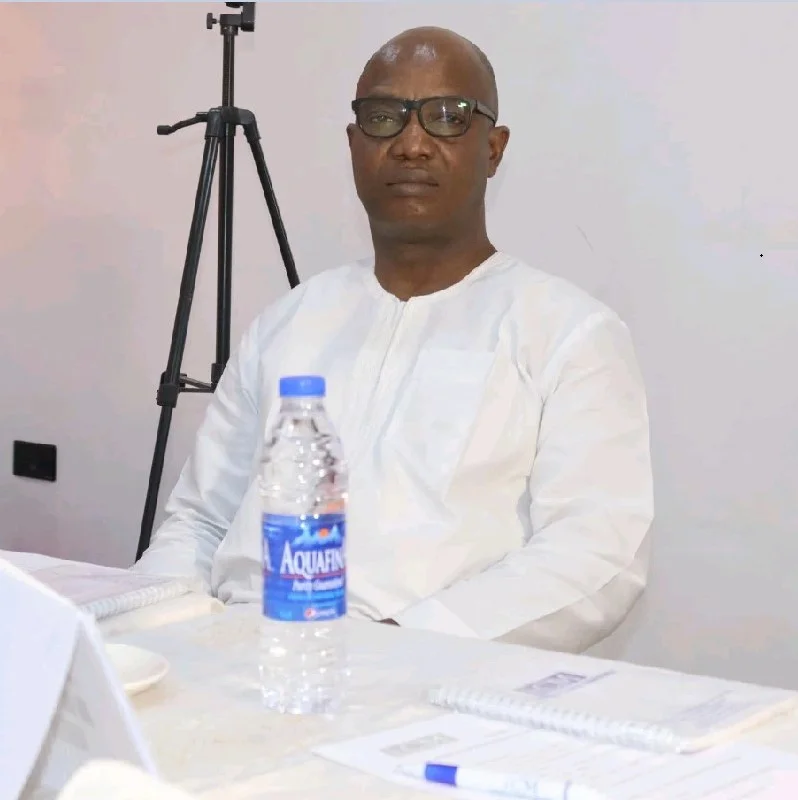
Written by Festus Edovia, ANIPR, FICM