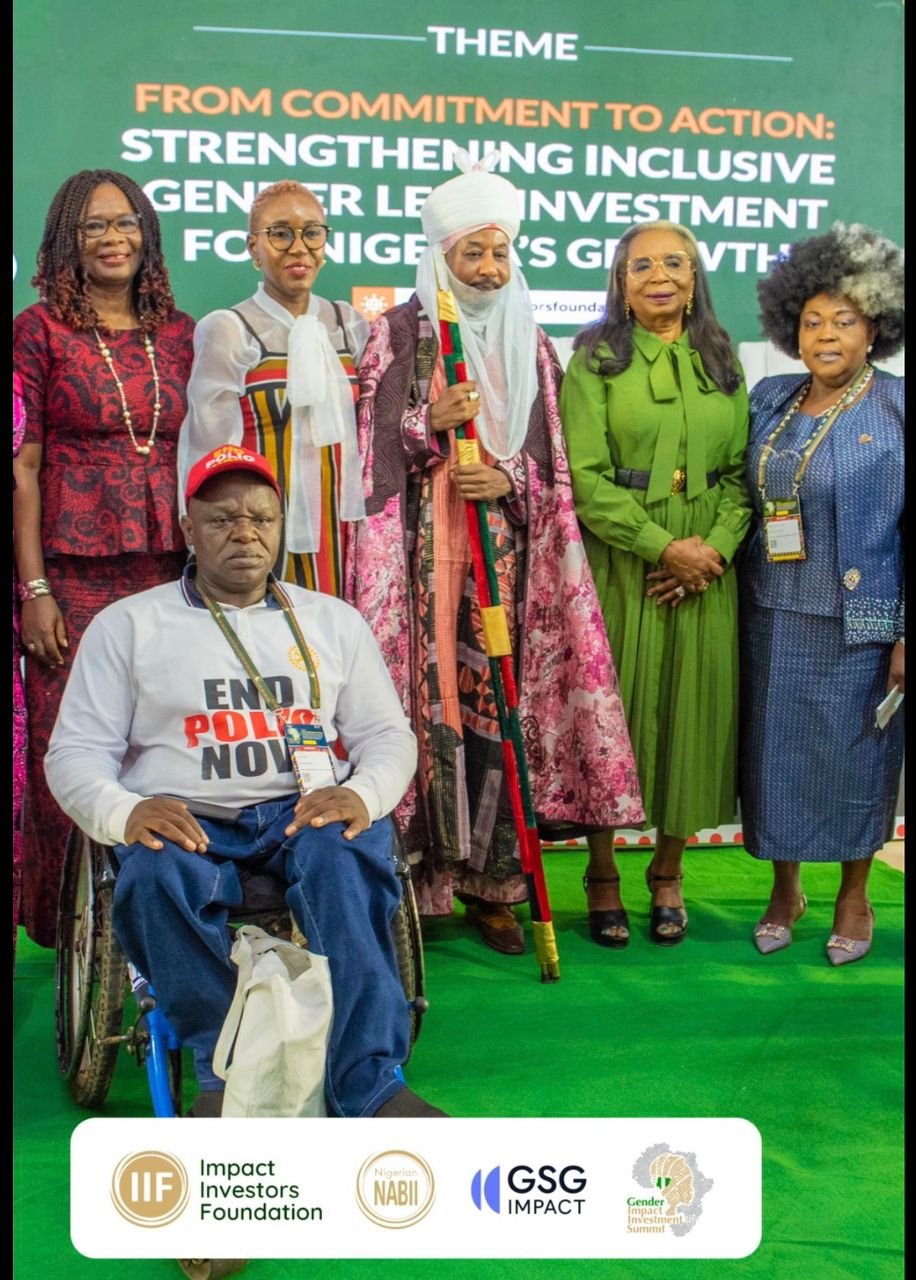
Impact Investors Foundation has unveiled GESI Baseline Report at 4th Gender Impact Investment Summit in Lagos.
NewsOnline Nigeria reports that Impact Investors Foundation has launched the Inclusive Capital Scorecard, a landmark Gender Equity and Social Inclusion (GESI) Baseline Report, at the 4th Gender Impact Investment Summit (GIIS) held in Lagos.
The summit, themed “From Commitment to Action: Strengthening Inclusive Gender Lens Investment for Nigeria’s Growth,” brought together policymakers, development finance institutions, investors and private sector leaders to advance inclusive financing and gender lens investment in Nigeria.
ALSO: Ayobami Celebrates Tokunbo Wahab at 54 for Leadership, Mentorship and Public Service Impact
According to IIF, the newly unveiled GESI Baseline Report establishes a critical foundation for measuring inclusion practices in impact investment while tracking progress toward Nigeria’s inclusive capital roadmap.
Speaking at the summit, Etemore Glover described the report as a data-driven tool designed to address structural barriers limiting access to finance for women, youths and persons living with disabilities.
“The GESI Baseline Report is more than a document; it is the data-driven foundation required to fix structural barriers in our financial system,” Glover stated.
“While women own nearly 40 per cent of Nigerian businesses, they receive a disproportionately small share of formal credit. This report empowers stakeholders to identify acute gaps and benchmark progress as we move toward a truly inclusive economy,” she added.
The summit also featured policy roundtables where regulators, ministries and government agencies made commitments aimed at improving collaboration and accelerating implementation of policies supporting women, youths and persons with disabilities in critical economic sectors, including climate-resilient industries.
Chair of GSG Nigeria Partner and Vice Chair of GSG Impact, Ibukun Awosika, said the report would help institutionalise accountability and drive inclusive capital deployment across Nigeria.
“This summit is the definitive platform to close investment gaps, unlock Nigeria’s full economic potential and ensure our growth is truly equitable and transformative,” Awosika said.
Delivering the keynote address titled “Turning Gender Equity into Economic Advantage,” Muhammadu Sanusi II stressed the need to dismantle barriers preventing women’s financial inclusion, describing gender equality as a major economic driver for national growth.
The summit also introduced enhanced Deal Rooms operating both physically and virtually to connect investors directly with women-led businesses ready for expansion. Organisers disclosed that the initiative secured soft investment commitments of about $250,000.
Technical sessions at the event focused on institutional capacity building, equipping both public and private sector stakeholders with GESI diagnostic tools, investment readiness frameworks and data systems needed to mainstream gender lens investing into core operations.
According to the organisers, the intervention remains urgent given Nigeria’s financial inclusion gap, with current data showing that only 23 per cent of Nigerian women have bank accounts compared to 77 per cent of men.
The summit attracted participation from financial institutions, development finance institutions and policymakers, with discussions centred on moving beyond conversations toward measurable action on inclusive investment and social equity.
The 4th Gender Impact Investment Summit reaffirmed IIF’s commitment to driving inclusive capital mobilisation and ensuring that women, youths and persons with disabilities are not excluded from Nigeria’s economic growth and prosperity agenda.