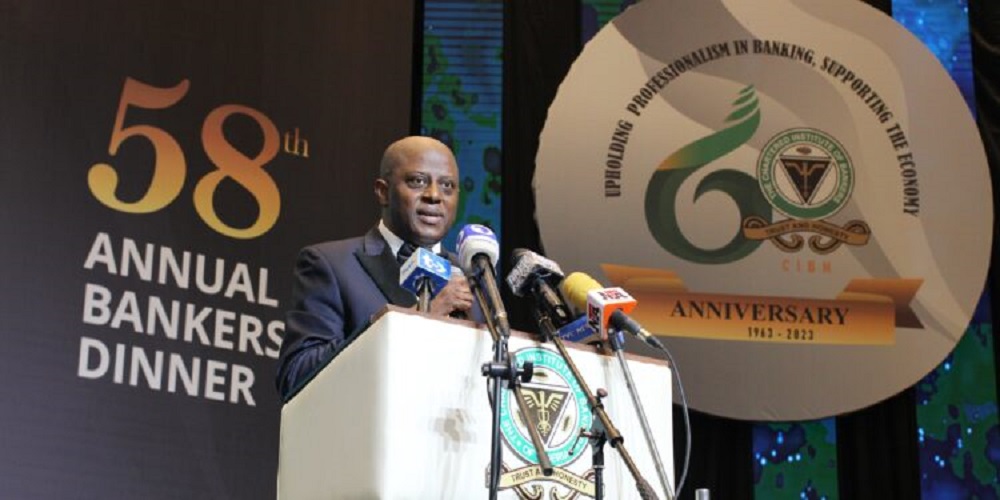
CBN has proposed new rules to separate banks, fintechs and related financial entities.
NewsOnline Nigeria reports that the Central Bank of Nigeria (CBN) has unveiled draft guidelines aimed at creating clearer operational boundaries between banks, financial technology (fintech) companies, and other closely linked financial entities as part of efforts to strengthen consumer protection and safeguard financial stability.
The proposal is contained in a circular dated June 10 titled, “Exposure of the Draft Guidelines on Ring-Fencing Operations of Closely Linked Entities in the Nigerian Financial System.”
According to the apex bank, the proposed framework seeks to establish distinct operational and functional separation among related financial institutions while addressing regulatory loopholes that arise when entities operating under different licences engage in overlapping activities.
ALSO: Court Orders INEC to Deregister ADC, Accord Party, Others Ahead of 2027 Elections
The CBN stated that the guidelines would cover governance structures, intra-group transactions, customer fund and data segregation, operational independence, recovery and resolution planning, and consolidated supervision.
“The Guidelines is intended to strengthen consumer protection, enhance transparency and accountability, mitigate contagion risks among closely linked entities, and preserve financial stability while supporting innovation and fair competition within the financial services sector,” the bank said.
Under the proposed framework, a closely linked entity is defined as any organisation that directly or indirectly controls, is controlled by, or shares common control with another entity through ownership interests, voting rights, common directors or executives, shared systems and branding, or contractual dependencies.
The CBN proposed that such entities operate independently, maintain separate governance and risk management systems, and individually meet capital adequacy and liquidity requirements regardless of group-wide resources.
The regulator also plans to tighten oversight of transactions among related entities.
According to the draft guidelines, no closely linked entity will be allowed to grant loans to or guarantee the obligations of another related company without obtaining prior written approval from the CBN.
Additionally, all intra-group transactions and exposures must be conducted on an arm’s-length basis and reported to the regulator every quarter.
To strengthen consumer rights and transparency, the apex bank proposed that financial institutions must obtain explicit customer consent before enrolling clients into products or services offered by affiliated entities.
Institutions will also be required to disclose such arrangements in clear and simple language while providing customers with alternative options where available.
The draft further seeks to protect depositors by prohibiting the use of customer funds for intra-group lending, proprietary trading, repayment of group debts, or financing the operational expenses of affiliated companies.
On data security, the CBN proposed stricter safeguards requiring customer information to be stored independently from systems operated by related entities to prevent unauthorised access and data commingling.
The regulator also proposed that promoters of closely linked financial entities establish non-operating holding companies to oversee their businesses.
However, shareholders unwilling to adopt the holding company structure may choose to merge their operations and surrender excess licences.
The CBN noted that the draft guidelines have been released for stakeholder consultation and public review.
Interested stakeholders have until July 9 to submit comments and recommendations on the proposed framework.
The proposal comes shortly after the apex bank released another draft guideline on financial holding companies, which seeks stricter ownership requirements, including a minimum 51 per cent equity stake in subsidiaries.
According to the CBN, the reforms form part of broader efforts to strengthen regulatory oversight, improve transparency, and ensure the long-term resilience of Nigeria’s financial system amid rapid growth in digital financial services.