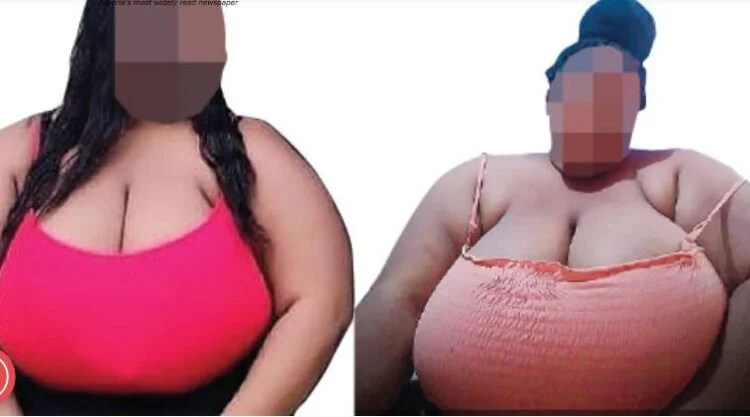
Men experiencing hunger or living in economically disadvantaged environments may be more likely to rate larger female breasts as attractive, according to a peer-reviewed study.
The research, conducted by psychologists Viren Swami and Martin J. Tovée, examined whether resource insecurity influenced men’s preferences for female breast size.
Titled Resource Security Impacts Men’s Female Breast Size Preferences, the study was published in the journal PLOS ONE in March 2013.
Researchers conducted two separate studies involving male participants in Malaysia and the United Kingdom.
The first study involved 266 men selected from three Malaysian locations representing low, medium and high socioeconomic environments.
ALSO: US-Based Jeweller Accuses House of Reps Aspirant Olalekan Shogbesan of Owing $5,200
Participants viewed rotating computer-generated female figures with different breast sizes and rated their physical attractiveness.
The results showed that men from the lowest socioeconomic setting rated larger breasts more positively than participants from the middle-income location.
Men from the wealthiest environment generally selected smaller breast sizes than the other two groups.
According to the researchers, the findings revealed an inverse relationship between socioeconomic security and preferred breast size.
The second study examined whether temporary hunger could produce a similar effect.
Researchers recruited 124 male university students in Britain, comprising 66 participants classified as hungry and 58 who had recently eaten.
Both groups viewed the same female figures under similar conditions and rated the breast sizes they found most attractive.
The researchers found that hungry participants selected a significantly larger average breast size than those who had eaten.
However, the difference was described as having a small-to-moderate effect size, meaning hunger was associated with a measurable but not overwhelming change in preference.
The authors suggested that men experiencing resource insecurity might place greater value on physical characteristics perceived as signalling access to food, energy reserves or physical maturity.
They stressed, however, that breast size could not be regarded as a straightforward or exclusive indicator of access to resources.
The researchers also acknowledged several limitations, including possible differences in average body characteristics across the Malaysian study locations and the possibility that participants perceived figures with larger breasts as heavier overall.
Other factors including culture, media exposure, individual psychology, breast shape, symmetry and overall body size could also influence assessments of attractiveness.
The findings therefore indicate an association within the groups studied and do not mean that all hungry or financially insecure men share the same preferences.
The study concluded that perceptions of physical attractiveness may be influenced by immediate conditions and broader socioeconomic environments rather than being entirely fixed