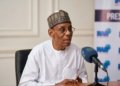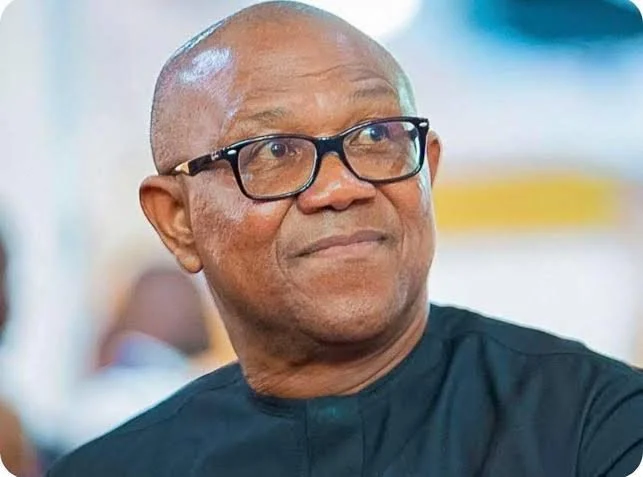
The Director-General of the Nigeria Democratic Congress (NDC) National Campaign Council, Ibrahim Abdulkarim, has urged supporters of former Anambra State Governor Peter Obi to help address his shortcomings rather than withdraw their support over disagreements or unmet personal expectations.
Abdulkarim said individuals who genuinely believe in Obi’s vision for a new Nigeria should remain committed to the political project and work towards strengthening areas where the former presidential candidate may have weaknesses.
Speaking during an interview with ARISE NEWS on Friday, Abdulkarim argued that no political leader is perfect, stressing that loyal supporters have a responsibility to identify and help manage their leader’s shortcomings.
“Because while you follow a leader, there is no leader that is complete. Every leader has a gap,” he said.
“You as a person that work with him, it’s a way to now see the gap and manage those gaps for him, in behalf of him. That’s how it happens.”
ALSO: IGP Disu Suspends Wanted Declaration Against Nduka Obaigbena, Nestoil Boss, Seven Others
The NDC campaign chief maintained that political loyalty should be driven by a shared commitment to national development rather than expectations of personal recognition or political rewards.
According to him, supporters who are genuinely committed to Obi’s political vision should not allow disagreements or individual grievances to undermine their participation in the movement.
“If your mindset is not for, if you are there not for yourself, if you are there the way other Nigerians are following Mr. Peter Obi, for a new Nigerian, you have a focus, you know where you are going to,” Abdulkarim said.
“Definitely, there is nothing that will make you to leave him.”
He suggested that some individuals who withdraw their support from political leaders do so because they believe their contributions have not received sufficient acknowledgement.
“But if you leave, you have entitlement. He’s supposed to say thank you to you. He’s supposed to look for you,” he stated.
Abdulkarim’s remarks followed the decision by a faction of the OK Movement to withdraw its political structures and campaign support from the NDC.
The group reportedly announced the suspension of its mobilisation activities across wards, local government areas and states, raising questions about divisions among groups associated with Obi’s political ambitions.
However, Abdulkarim rejected suggestions that the development amounted to a crisis within the NDC, arguing that disagreements involving a support group should not be equated with instability within a political party.
“I wanted not to talk about it because I don’t think it’s fair for a news agency to take up this kind of conversation and also call it a crisis, talking about a support group with the party,” he said.
“How will the support group become something that we can compare with the party?”
He explained that the OK Movement was originally established during efforts by Obi and his supporters to secure a presidential ticket through the African Democratic Congress (ADC).
According to Abdulkarim, the group had fulfilled its initial purpose and was no longer central to the political strategy being pursued.
“OK Movement is just an impression that we created when we were in ADC, just for us to get that ticket. And it has overstayed its value. And we have moved on to continue,” he said.
Abdulkarim also referred to Obi’s reported explanation of the decision to restructure the movement and remove John Ogulu as its director-general.
He maintained that the broader Obidient movement remained active despite disagreements involving individual support groups or their leadership.
“Obedient Movement is beyond individual,” he added.
The campaign director-general further praised Obi’s ability to assess the intentions of individuals around him, suggesting that the former governor possesses strong political instincts.
“He sees you 10 kilometres before you even arrive. He knows what you are planning to do,” Abdulkarim said.
The controversy followed the OK Movement faction’s announcement that it was withdrawing its campaign structures and mobilisation support from the NDC.
The withdrawal was reported by The PUNCH, which also reported the NDC’s response dismissing the faction’s action as a sponsored distraction.
The party’s position suggests that its leadership does not consider the withdrawal a significant threat to its political activities, although the departing faction’s announcement indicates a disagreement over the direction of the movement.
The development comes amid political realignments and preparations ahead of Nigeria’s 2027 general elections, as parties and support groups assess their alliances, leadership structures and campaign strategies.
Obi, who emerged as a prominent opposition figure during the 2023 presidential election, continues to attract attention from political supporters and organisations seeking to influence the country’s next electoral contest.
Abdulkarim’s comments highlight an ongoing debate within political movements about the balance between loyalty to individual leaders, accountability, internal disagreements and the expectations of grassroots supporters.
While the NDC campaign chief insists that supporters should help address Obi’s weaknesses rather than abandon him, the withdrawal of the OK Movement faction reflects tensions over political organisation and leadership decisions.
For now, the NDC maintains that the departure of the faction does not represent a wider crisis within the party or the broader Obidient movement.