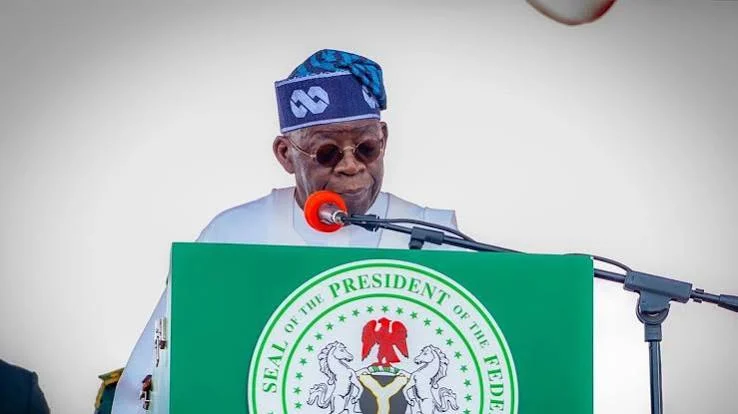
President Tinubu has hailed ICC ruling rejecting Sunrise Power claims over Mambilla Project.
NewsOnline Nigeria reports that President Bola Ahmed Tinubu has welcomed the judgment of the International Chamber of Commerce (ICC) arbitration tribunal in Paris, which rejected claims brought by Sunrise Power and Transmission Company Limited in the long-running dispute over the Mambilla Hydroelectric Power Project in Taraba State.
The tribunal, in its September 17, 2026 award, dismissed Sunrise Power’s claims relating to a 2020 settlement agreement and its addendum, including its demand for $400 million comprising a $200 million settlement sum and a $200 million default payment. The panel also ordered Sunrise Power and its promoter, Leno Adesanya, to reimburse Nigeria 75 per cent of the country’s legal fees and expenses incurred in the arbitration.
Nigeria’s legal costs were assessed at $11,819,506.51, with $2.5 million to be recovered from funds held in escrow by the ICC and the remaining $9,319,506.51 payable by Sunrise Power and Adesanya, with interest accruing at 10 per cent annually, compounded annually, until full payment. Arbitration costs were fixed at $1,656,500, with Sunrise Power and Adesanya responsible for 75 per cent and Nigeria for 25 per cent.
ALSO: FG Wins $2.35bn Mambilla Arbitration Dispute Against Sunrise Power
Reacting to the ruling, Tinubu described it as a significant development in Nigeria’s defence of its interests in the dispute.
“An International Arbitration Tribunal under the auspices of the International Chamber of Commerce (ICC) in Paris, today, September 17, 2026, issued an award in favour of our country, rejecting the claims in the arbitration instituted by Sunrise Power and Transmission Company Ltd (Sunrise),” the President said.
According to Tinubu, Sunrise had sought $680 million as a settlement sum and interest in connection with another arbitration in which it was seeking more than $2.7 billion in compensation and interest over disputes associated with the development of the Mambilla project.
The President said the latest decision “affirms the Nigerian State’s determination not to succumb to predatory and exploitative claims by corrupt local and international entities and their enablers and funders.”
Tinubu commended the Attorney-General of the Federation and Minister of Justice, Lateef Fagbemi, and officials of the Federal Ministry of Justice for their role in the case.
He also commended Nigeria’s defence team, led by Elizabeth Oger-Gross and Tolu Obamuroh of Paul Hastings LLP, for their handling of the arbitration.
The President acknowledged the contributions of former President Olusegun Obasanjo and the late former President Muhammadu Buhari, who testified in the proceedings. He also commended former Ministers Babatunde Fashola and Suleiman Adamu, other witnesses and experts for their participation in Nigeria’s defence.
Tinubu further acknowledged the support of the National Security Adviser and the Economic and Financial Crimes Commission, which he said conducted an investigation connected to the case.
The dispute dates back to a 2003 agreement concerning the proposed construction of a 3,050-megawatt Mambilla hydropower plant in Taraba State under a build-operate-transfer arrangement. Sunrise commenced arbitration proceedings against Nigeria at the ICC in October 2017, seeking approximately $2.354 billion over an alleged breach of contract.
A separate dispute subsequently arose from a 2020 settlement agreement between the parties, with Sunrise seeking $400 million comprising the settlement and default sums. The latest tribunal award rejected that claim.
The President said Nigeria remained committed to working with genuine investors and honouring its legal obligations, while defending the country’s interests against claims it considers unfounded or detrimental to the national interest.
“Today’s ICC ruling clears the single biggest legal hurdle that has paralysed the Mambilla hydro power project for years,” Tinubu said.
The ruling marks a significant development in the long-running legal dispute surrounding the Mambilla project, which has faced contractual and legal challenges for more than two decades.