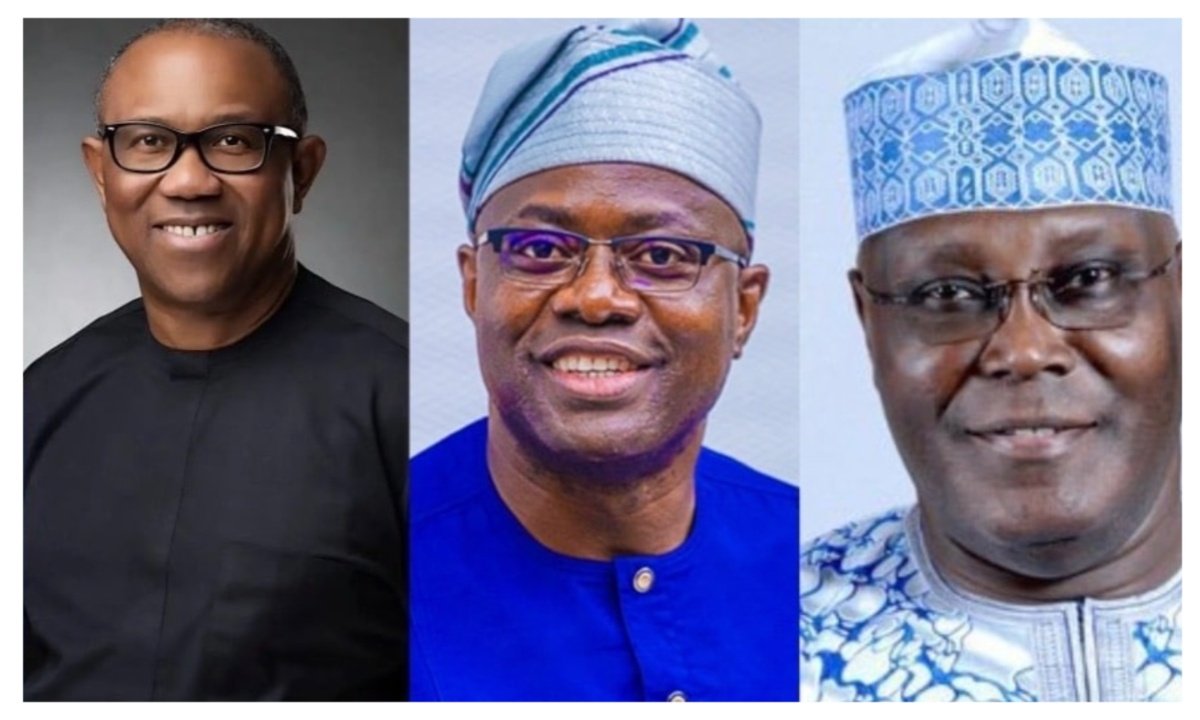
Opposition parties gathered at the Shehu Musa Yar’Adua Centre on 31 August 2026 to discuss forming a united front ahead of the 2027 general elections, with the summit themed “A Framework for Opposition Cooperation and Coordination”. The stakes were high at the conference, but some of the most prominent opposition presidential candidates, including Alhaji Atiku Abubakar of the African Democratic Congress (ADC), Peter Obi of the Nigeria Democratic Congress (NDC), and Seyi Makinde of the Allied Peoples Movement (APM), were conspicuously absent.
Despite the absence of these political bigwigs, the summit attracted other opposition presidential candidates, Prince Adewole Adebayo of the Social Democratic Party (SDP), Donald Duke of the Peoples Redemption Party (PRP) and the vice-presidential candidate of the Allied Party Movement, Lawal Daura and other party stalwarts. At the summit, they agreed to “support any political party that emerges in 2027. Donald Duke emphatically stated that “whatever decision is arrived at today; I will not walk away but strive all along because that is what the people want to see”.
It would be recalled that what made the All Progressives Congress (APC) a successful and formidable opposition party in 2013-2014 was that the Action Congress of Nigeria (ACN), the Congress of Progressive Change (CPC), a faction of the All Progressives Grand Alliance (APGA) and a breakaway faction of the Peoples Democratic Party (PDP) merged to form the All Progressives Congress (APC), which defeated President Goodluck Jonathan in 2015.
ALSO: Incestuous Fathers And Sexual Violation of the Girl-Child By Gabriel Akinlade-Daniel
But the difference between the formation of APC and these current opposition parties was that the merger was a full legal dissolution of the constituent parties and the registration of an entirely new party with the Independent Electoral Commission (INEC), a process that took more than a year, involving candidates who were willing to replace their ambition with a negotiated ticket. The formation and registration of APC as a political party was very successful, as echoed by Salihu Lukman because “they agreed on the rules before they knew the outcome.” That is why political analysts are of the opinion that an opposition party’s single candidate, as being proposed, cannot work and dead on arrival because no proper thought was given to it and because the opposition is not organised, selfish and not willing to surrender their political ambition.
However, the G100 summit in Abuja was only framed as a process, not a decision. Lukman said the summit was not asking any party to dissolve, merge or produce a presidential candidate, insisting that no such question was on the agenda. Though the strategic move of a single opposition candidate is clear, political obstacles are very obvious, as each party’s presidential candidate has built a campaign apparatus, rewarded loyalists and made commitments to donors and supporters. Since their main objective is to remove President Bola Ahmed Tinubu, political watchers have said that “dissatisfaction with Tinubu is not equivalent to support for the opposition; that economic pain does not automatically convert into opposition votes without organisation, a single candidate, and a ground game. They also warned that social media dominance is no substitute for ward-level mobilisation. Elections are not won by likes, reposts, hashtags or viral videos”. Thus, telling parties to “choose one candidate” is easy; explaining the how- legally, financially and politically remained unanswered.
However, the option open to the opposition political parties will likely be to enter the 2027 presidential election separately, or one or two may agree to come together, while the rest may decide to run independently. But if the principal actors engage, they may succeed, but if they remain selfish, self-centred, and at arm’s length, then the process will collapse and will be to your tent. To the government in power, the All Progressives Congress, (APC), the more divided the opposition is, is a strategic advantage to them. But the question Nigerians are asking is: which party will step down, who will be the candidates and who will walk away?