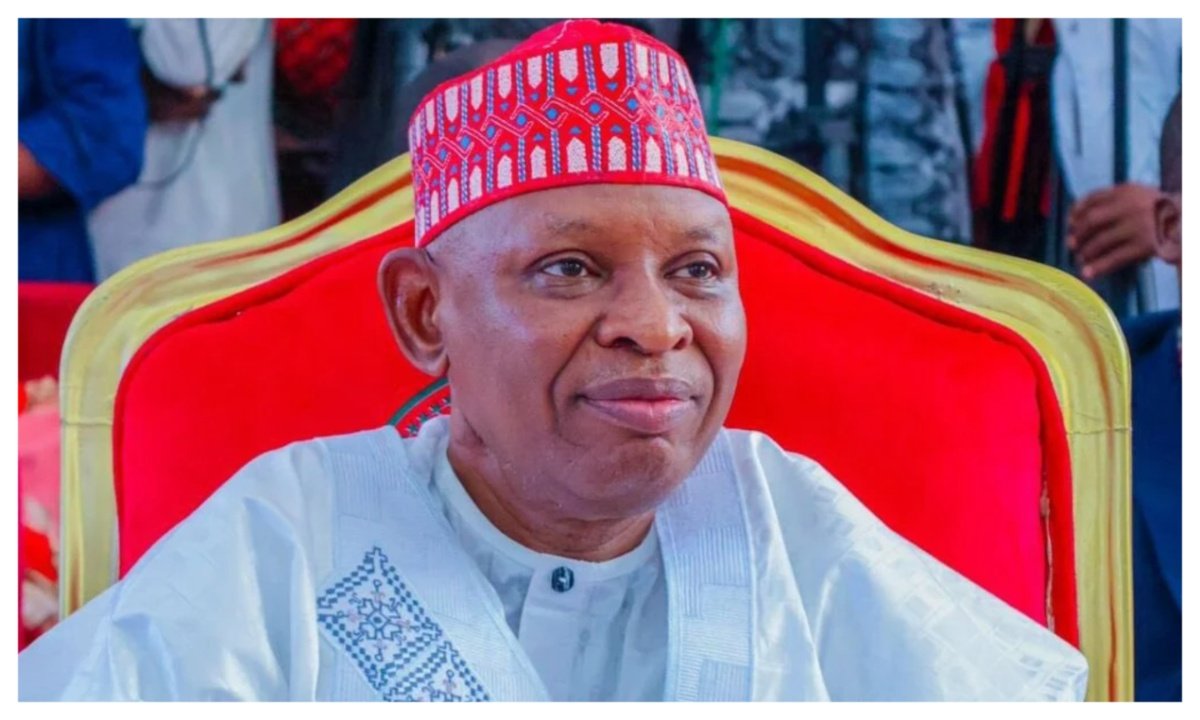
Governor Abba Kabir Yusuf defection to APC has raised fresh questions over Kano Emirship Crisis.
NewsOnline Nigeria reports that Governor Abba Kabir Yusuf’s defection to the All Progressives Congress (APC) has injected new uncertainty into the long-running Kano emirship crisis, reviving debate over whether the political realignment will finally resolve the dispute or further complicate an already delicate situation.
For nearly two years, Kano State has been embroiled in an unprecedented royal standoff, with two emirs laying claim to the historic throne. Emir Muhammadu Sanusi II currently occupies the ancient Gidan Rumfa Palace, while the 15th Emir of Kano, Aminu Ado Bayero, operates from the Nassarawa mini-palace. Both figures enjoy the backing of rival political and institutional interests.
ALSO: Kano Assembly Members Dump NNPP, Join APC (FULL LIST)
How the Crisis Began
The crisis dates back to March 2020, when former governor Abdullahi Umar Ganduje dethroned Emir Sanusi Lamido Sanusi over allegations of insubordination and installed Aminu Ado Bayero in his place. Many observers, however, linked the decision to political differences, particularly Sanusi’s perceived closeness to former Kano governor, Senator Rabiu Musa Kwankwaso.
In May 2024, the situation shifted again when the NNPP-led government of Abba Kabir Yusuf repealed the 2019 emirate law, scrapped the five emirates created under it, and reinstated Sanusi as Emir of Kano. While the move restored a single-emir structure, it triggered fresh legal battles, with Bayero challenging his removal in court.
Defection Alters Political Calculations
Governor Yusuf’s recent defection to the APC has significantly altered the political equation. By aligning with the ruling party, Yusuf is now politically closer to Ganduje and Deputy Senate President Barau Jibrin; figures widely regarded as sympathetic to Bayero’s camp.
The move also marked a sharp break from Yusuf’s former political mentor, Senator Kwankwaso, under whose influence Sanusi was believed to have secured his reinstatement. This realignment has fueled speculation that the emirship dispute could be revisited as part of broader political reconciliation within the APC.
Government Signals Dialogue
Speculation intensified following comments by the Commissioner for Information and Internal Affairs, Ibrahim Abdullahi Waiya, who hinted that the crisis could soon be resolved through dialogue.
“Now we will sit down and resolve such problems calmly. These issues will no longer be difficult. There will be discussions; where apologies are needed, they will be offered, and where forgiveness is required, it will be granted. In some cases, someone may be asked to make sacrifices for the sake of peace,” Waiya said during a radio programme.
His remarks were widely interpreted as a signal that political dialogue, rather than prolonged litigation, may be explored.
Sanusi Remains Emir – Gov Yusuf
Amid growing speculation, Governor Yusuf moved to clarify his position, insisting there was no plan to remove Emir Sanusi.
Speaking through his spokesman, Sanusi Bature, the governor said the reinstatement of Sanusi followed the repeal of the emirates law and that there was no intention to amend the law again.
“There is no plan to replace Emir Sanusi on the throne of Kano. Emir Sanusi remains the Emir of Kano. This defection to the APC will not change the status quo,” Yusuf said.
Bayero Camp Rejects Negotiation
Despite the assurances, the camp of Emir Aminu Ado Bayero has rejected any talk of a negotiated settlement. Sarkin Dawakin Babba, Aminu Babban Dan Agundi, who instituted the legal challenge against the Kano State Government, maintained that the matter should be left to the courts.
“There is no negotiation that can lead to the removal of Emir Aminu Ado Bayero. The matter is before the courts, and no one has the authority to give judgment except the court. Everyone should wait for the Supreme Court’s decision,” he said.
Legal Experts Say Settlement Still Possible
Legal experts, however, argue that a settlement is not legally foreclosed despite the case being in court. Barrister Umar Usman Dan Baito, a lecturer at Northwest University, Kano, explained that Nigerian law allows for settlement at any stage of litigation.
“Even if a case is before the Supreme Court, parties can still reach a settlement through Alternative Dispute Resolution. Once the court adopts the agreement, the case comes to an end,” he said.
Resolution or Further Complication?
While Governor Yusuf’s move to the APC could, in theory, create room for political consensus, it has also deepened suspicions and hardened positions among the rival camps. With final court judgments still pending and political interests continuing to intersect with traditional authority, the Kano emirship crisis remains delicately balanced.
Whether the governor’s defection will unlock a lasting resolution or further entangle the dispute will depend on how political dialogue, legal processes, and traditional reconciliation are managed in the coming weeks.