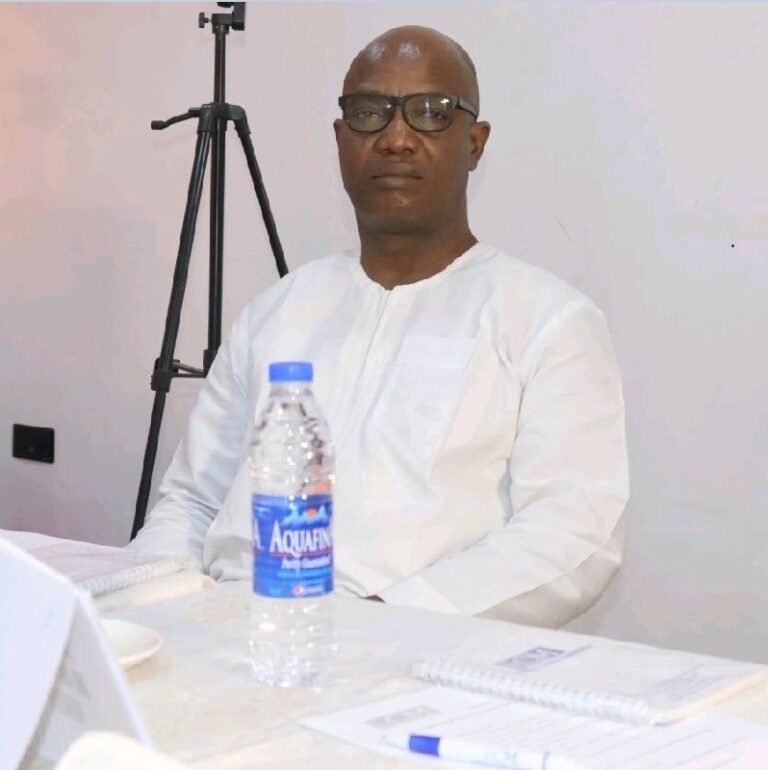
Festus Edovia
It is becoming increasingly difficult to ignore a troubling reality in Nigeria today: the gap between political activity and practical solutions continues to widen. At a time when the nation faces pressing challenges, ranging from insecurity and corruption to inadequate infrastructure, weak social services, and unstable power supply, citizens are still waiting for clear, sustained responses that improve everyday life.
Instead, public discourse often appears dominated by political maneuvering. The emphasis seems less on solving problems and more on securing and retaining power. While politics is an essential part of democracy, governance must remain its core purpose. When that balance is lost, the consequences are felt most by ordinary people.
Across the country, economic pressures are intensifying. Rising living costs have placed basic necessities out of reach for many households. Families struggle to afford food, education, housing, and healthcare. In some cases, preventable and treatable conditions still lead to loss of life due to limited access to medical care. These realities underscore the urgency for policies that directly address citizens’ welfare.
Nigeria is not lacking in potential. With its vast natural resources, energetic population, and global cultural influence, the country holds significant promise. Yet, many citizens feel disconnected from the benefits of this potential, as economic opportunities and public resources appear unevenly distributed.
The current moment calls for a renewed focus on governance anchored in clarity, accountability, and results. Effective leadership requires more than ambition, it demands well-thought-out policies, consistent implementation, and measurable impact. Citizens deserve to see progress not only in plans and announcements, but in tangible improvements to their daily lives.
Equally important is the role of civic participation. For Nigeria to move forward, individuals with integrity, competence, and a genuine commitment to public service must be encouraged to engage in the political process. Sustainable change often begins with expanding the pool of leaders who prioritize national development over personal gain.
This is not simply a critique rather a call for alignment. Nigeria needs leadership that balances political strategy with policy substance, and ambition with responsibility. It needs leaders who understand that power is not an end in itself, but a means to serve.
The path forward lies in restoring confidence through action, by placing citizens at the center of governance and delivering solutions that reflect the country’s true potential.
By Festus Edovia, ANIPR, FICM
Jonathan and AGF have moved to strike out suit challenging his 2027 election eligibility. …
Impact Investors Foundation has unveiled GESI Baseline Report at 4th Gender Impact Investment Summit in…
Ayobami has celebrated Tokunbo Wahab at 54 for Leadership, Mentorship and Public Service Impact. …
Union Bank has marked 2026 International Day of the Boy Child with School Outreach in…
Sterling Financial has deepened market confidence as assets cross ₦4tn and profit jumped 53% in…
Tinubu Presidency has knocked Peter Obi over Rwanda trip comments. NewsOnline Nigeria reports that…