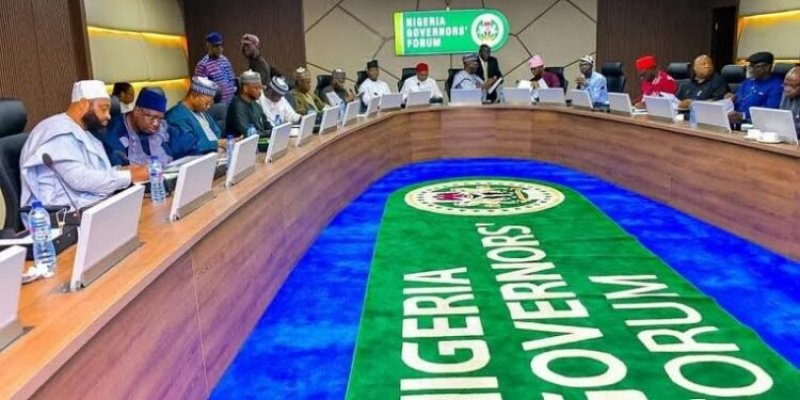
Nigeria Governors are facing rising criticism over FAAC Windfall Allocation with limited impact.
NewsOnline Nigeria reports that state governors in Nigeria are facing growing criticism despite receiving an estimated N9 trillion from the Federation Account Allocation Committee (FAAC) in 2025. Labour unions, civil society groups, and opposition parties argue that soaring revenues have yet to translate into tangible improvements in citizens’ welfare.
FAAC allocations to states jumped by over N2 trillion in just one year, according to the National Bureau of Statistics and collated by The PUNCH. The increase reflects higher federation inflows, yet organised labour and political analysts say governance weaknesses, corruption, and misplaced priorities have prevented meaningful development.
The Nigeria Labour Congress (NLC) warned that while allocations surged, the benefits for ordinary citizens remain minimal. Civil society organisations echoed these concerns, highlighting poor fund management and demanding stronger accountability. Economists also cautioned that states’ dependence on federally shared revenue continues to undermine sustainable fiscal growth.
ALSO: EFCC Arraigns BFI Group Corporation, Six Others Over Alleged €100 Million CBN Fraud
Data from the FAAC shows states received N7.315 trillion in 2025, up from N5.186 trillion in 2024—a 41% increase. Including the constitutionally mandated 13% derivation revenue, total inflows rose to N8.934 trillion, up from N6.533 trillion in 2024. Despite this surge, monthly disbursements reveal that while liquidity improved, the additional funds have yet to yield proportional improvements in healthcare, education, and infrastructure.
BudgIT’s 10th State of States Report highlighted that over 30 states rely heavily on FAAC for the bulk of recurrent revenue. Many states received more than 60% of their current revenue from FAAC, reducing the incentive to grow internally generated revenue (IGR). The proportion of IGR in total recurrent revenue declined from 25.27% in 2023 to 20.27% in 2024, underscoring ongoing dependence on federal transfers.
Labour unions, opposition parties, and civil society actors expressed concern over the disconnect between increased revenue and citizen welfare. In Sokoto State, the PDP said development is lacking in 21 of 23 local government areas despite rising allocations. In Lagos, opposition groups decried rising rents and neglected infrastructure. In Plateau, Zamfara, and Kebbi states, parties cited poor healthcare, unemployment, and inadequate education as evidence that federal funds have not improved living standards.
Some states, however, received praise for specific projects. In Nasarawa, the Labour Party commended the Lafia flyover and other infrastructure initiatives, noting government prudence and commitment to development. Kwara State saw mixed views, with the PDP criticizing limited spending in Ilorin, while the APC pointed to investments across infrastructure, education, healthcare, and social programmes.
Analysts emphasised that FAAC windfalls, while substantial, will not automatically translate to development without effective governance, transparency, and accountability. Calls for reforms include stronger oversight of state budgets, incentivising IGR growth, and ensuring allocations reach citizens through visible projects in education, healthcare, and infrastructure.
The 2025 FAAC surge offers states unprecedented fiscal space, but unless governance reforms are prioritised, critics warn that Nigeria risks repeating the pattern of “big money, small impact” in subnational development.