FG power allocation has sparked concern as Abuja gets over twice electricity supplied to South-East.
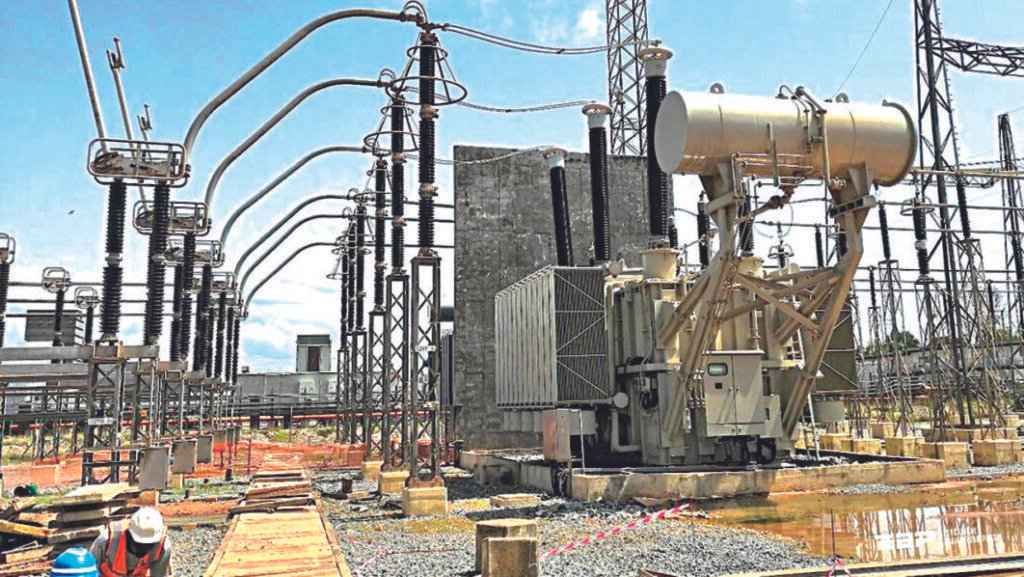
NewsOnline Nigeria reports that Nigeria’s national electricity grid allocated 503 megawatts of power to Abuja on March 24, 2026, while the entire South-East region; comprising five states with over 21 million residents received just 203 megawatts, according to grid data obtained from the Nigerian Independent System Operator (NISO).
The data, analyzed by the platform StatiSens highlights a significant disparity in electricity distribution between the nation’s capital and the South-East region, which includes Enugu State, Anambra State, Imo State, Abia State, and Ebonyi State.
ALSO: Stella Oduah Cleared as Firms Linked to Her Plead Guilty, Forfeit N1.98bn in Fraud Case
A similar pattern occurred the previous day, March 23, when Abuja received 459 megawatts while the South-East was allocated 186 megawatts, reinforcing concerns about long-standing power shortages in the region.
Power supply far below demand
Analysis of national grid data for March 24 showed that Nigeria’s total distributed load of 2,793 megawatts would provide only 56 watts per household if shared evenly among the country’s estimated 49.5 million homes barely enough to power a single energy-saving light bulb.
The situation is even more severe in the South-East. The Enugu Electricity Distribution Company (EEDC), which serves about 1.37 million registered customers across the five states, would deliver roughly 148 watts per connection if the 203 megawatts were evenly distributed. This amount is insufficient to power common household appliances such as a fan and laptop simultaneously.
Businesses rely heavily on generators
Across major commercial hubs such as Onitsha, Aba, Owerri, Enugu, Abakaliki, and Umuahia, businesses and households have increasingly turned to diesel generators, inverters, and solar systems to cope with unreliable electricity supply.
This shift has created what analysts describe as a “parallel energy economy,” driven by necessity rather than innovation, as residents attempt to bridge the persistent power gap.
The financial burden of this situation is substantial. According to the Manufacturers Association of Nigeria (MAN), manufacturers spent ₦676.6 billion on generators and alternative energy in the first half of 2025 alone. Meanwhile, the World Bank estimates that unreliable electricity costs Nigeria approximately $29 billion annually in lost economic productivity.
Implications for Nigeria’s digital ambitions
The power disparity comes at a critical time as Nigeria pushes forward with its $2 billion digital infrastructure initiative, Project BRIDGE, aimed at laying 90,000 kilometres of fibre optic cable to connect all 774 local government areas to a national broadband network.
The project has attracted international support, including a $100 million commitment from the European Bank for Reconstruction and Development and a €22 million grant from the European Union.
However, experts warn that digital infrastructure requires reliable electricity to function. Essential components of a digital economy such as data centres, internet routers, fintech systems, and remote work tools depend on stable power supply, something the current allocation to the South-East cannot adequately support.
Long-standing distribution imbalance
Further analysis of grid allocation data shows that the power shortfall is not a temporary occurrence. Historical records indicate that EEDC has consistently ranked among the lowest-allocated distribution companies in Nigeria relative to the population it serves.
Although allocations fluctuate periodically, the underlying imbalance—where the South-East receives significantly less electricity per capita than major urban distribution zones—has remained largely unchanged, raising fresh concerns about equitable power distribution across the country.