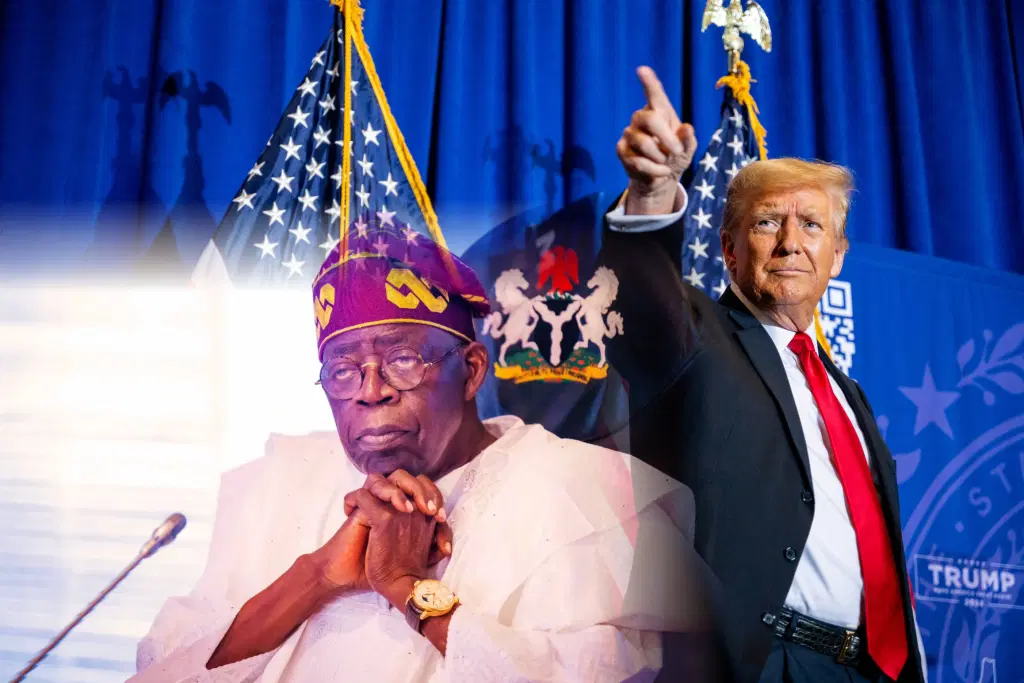
US Congress has warned that Nigeria risks widespread Christian–Muslim violence amid global religious freedom crisis.
NewsOnline Nigeria reports that the witnesses appearing before the United States Congress Foreign Affairs Committee have warned that Nigeria is at risk of sliding into widespread Christian–Muslim violence, identifying the country as a major flashpoint in a growing global crisis of religious freedom.
The warning is contained in written testimonies released ahead of a joint hearing of the House Subcommittee on Africa and the Subcommittee on the Western Hemisphere, holding on Wednesday, titled “Defending Religious Freedom Around the World.” The session is focused on what US lawmakers describe as escalating threats to religious freedom globally.
ALSO: FG Plans N3.6tn FAAC Deduction for Electricity Subsidies in 2026–2028
According to the testimonies, recurring killings, displacement and deepening insecurity in Nigeria point to the early stages of a broader religious conflict, with implications beyond the country’s borders.
Among the scheduled witnesses are former US Ambassador-at-Large for International Religious Freedom, Sam Brownback; Principal Adviser for Global Religious Freedom at the US State Department, Mark Walker; Grace Drexel, daughter of detained Chinese pastor Ezra Jin; and former chair of the US Commission on International Religious Freedom (USCIRF), Dr Stephen Schneck.
In his prepared testimony, Brownback warned that Nigeria has become one of the most dangerous places in the world for Christians, describing it as a central flashpoint in an emerging continental crisis.
“Radical, militant Islam continues its purification efforts throughout the MENA region and beyond. Syria and Nigeria are key focus areas of opportunity for them,” he said, adding that “early warning signs of a Muslim-on-Christian war are brewing across Africa, with Nigeria at the centre of that danger.”
Brownback also described religious freedom as a key fault line in global politics, warning that authoritarian regimes increasingly view faith communities as threats to state control. He cautioned that failure to act decisively could allow violence in Nigeria to escalate into mass atrocities and raised concerns about foreign involvement in the country’s security landscape.
In a separate testimony, Schneck said freedom of religion or belief is facing a “historic crisis” worldwide, driven by rising authoritarianism, religious nationalism and weak governance. He identified Nigeria, Syria and Sudan as countries where insecurity and state fragility have created dangerous conditions for religious communities.
“Nigeria and Syria are experiencing high levels of societal insecurity, and their governments have been unable to halt widespread violence against communities of faith,” Schneck stated, noting that armed groups and criminal networks often exploit religious identity to fuel killings and displacement.
Schneck also criticised the United States government for failing to fully implement the International Religious Freedom Act of 1998, arguing that Washington has relied more on rhetoric than sustained, country-specific action. He expressed concern over delays in the release of US religious freedom reports and the absence of updated designations of Countries of Particular Concern (CPCs).
He noted that Nigeria remains the only country currently designated as a CPC, following a redesignation by former US President Donald Trump, and warned that selective advocacy focusing on one faith undermines the credibility of international religious freedom efforts.
Nigeria was redesignated as a Country of Particular Concern last year over alleged religious freedom violations, a move that heightened diplomatic tensions and prompted intensified security engagements between Abuja and Washington.
However, the Federal Government has consistently rejected claims of systemic persecution of Christians, maintaining that insecurity affects Nigerians of all religious backgrounds.
In recent months, security cooperation between both countries has intensified, including high-level meetings between Nigeria’s National Security Adviser, Nuhu Ribadu, and senior US defence officials, as well as visits by US congressional delegations to Abuja to discuss counter-terrorism and regional stability.