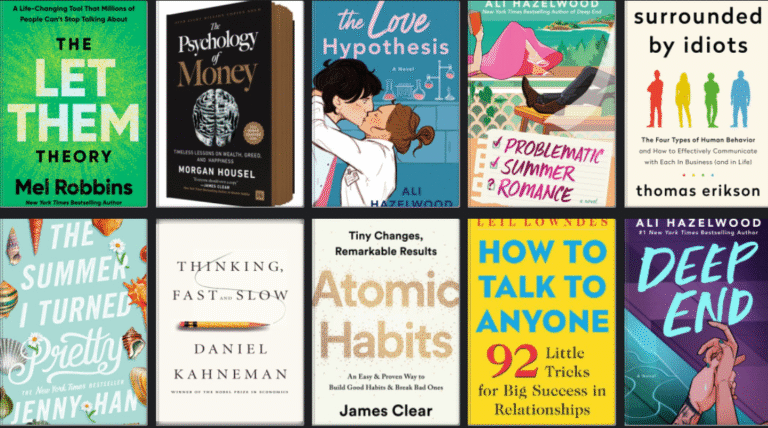
Owning a book once meant holding paper bound by glue and thread. Today a subscription login can replace an entire library. Services give instant access to thousands of titles without the need for storage space. This shift changes the way books are valued. Instead of a personal collection that shows identity and taste a reader now pays for a window into an endless catalog. Some still feel the pull of shelves filled with spines while others find comfort in knowing a new read is always one click away.
In this changing landscape the search for balance continues. ****** gives people a simple way to search while offering a huge number of books and in doing so it blurs the line between ownership and access. What once required trips to bookshops or libraries now takes only a few taps. That simplicity does not erase the deeper question though. Does renting access carry the same emotional weight as holding a book that belongs to no one else?
A bookshelf acts like a memory wall. Each book carries the story of when and why it was bought. Some carry notes scribbled in margins and a coffee stain that sparks a memory of a rainy afternoon. Subscriptions take away that permanence. A title can vanish when a contract ends or a platform shifts focus. What remains is the experience of reading but not the artifact itself.
At the same time subscription models fit the rhythm of modern life. The desire for convenience outweighs the need for permanence for many readers. There is a sense of freedom in knowing that a book does not need to be carried across moves or dusted on weekends. The trade off is emotional. What is gained in variety is often lost in attachment.
To understand this trade off more clearly consider these perspectives:
Access appeals to those who care more about discovery than collection. Every book is temporary but the variety is endless. A person may never own “War and Peace” yet they can start it anytime without buying a copy. This approach turns literature into a streaming service for the mind. It changes reading from a keepsake hobby into a flexible activity.
Subscriptions shift spending from one-time purchase to recurring payment. The math can look simple. A voracious reader finds more value paying a monthly fee than buying every title. Yet there is also risk. Stop paying and access disappears. That fragility shapes the sense of value differently from a book bought once and kept for decades.
Sharing books used to mean handing one across a table with a smile. Subscriptions change that ritual. Instead of passing along a copy the act becomes one of sending a link or suggesting a platform. It is less tactile but not less social. Conversations still spark around shared reads though the object of exchange has become invisible.
Each point highlights the way ownership and access play tug of war in the minds of readers. The outcome is not uniform. Some feel relief at never having to dust shelves while others mourn the loss of spines lined neatly in a row.
Culture has long tied books to status and knowledge. A room lined with volumes once carried weight as a sign of learning. That symbol weakens when walls hold screens instead of shelves. The meaning of being well read shifts from visible proof to invisible engagement. A person can now read more than ever yet show nothing of it.
There are echoes of the music world here. Records gave way to tapes then CDs and streaming. Collectors still prize vinyl yet most people press play on a phone. Books are following the same current though with slower steps. The tension between owning and streaming lingers. Whether shelves will empty out or remain as relics of pride is a story still being written.
It may be too early to say what the endgame looks like. Libraries of paper still thrive even as subscriptions spread. Some will always keep beloved titles in print while dipping into digital catalogs for variety. Others will live fully in the world of access with no attachment to ownership at all.
The conversation circles back to memory and meaning. A book on a shelf is an anchor to a moment in time. A book on a screen is a moment that passes once read. Both have value. The choice lies in whether the future is measured in collections of objects or collections of experiences.
APC Governors has splitted as rival factions emerge in Progressive Governors Forum. NewsOnline Nigeria…
Shyllon Museum is set to host NATOP to boost cultural tourism and position Ibeju-Lekki as…
Unity Bank has disbursed over N500m through SHOCOF to empower traders and boost SMEs in…
Court has rejected bail and dismissed objections in alleged $1.5m fraud case against Investment Boss…
Former President Jonathan has reacted to calls to contest 2027 presidency. NewsOnline Nigeria reports…
President Tinubu has approved the redeployment of Fani-Kayode from Germany to South Africa. NewsOnline…