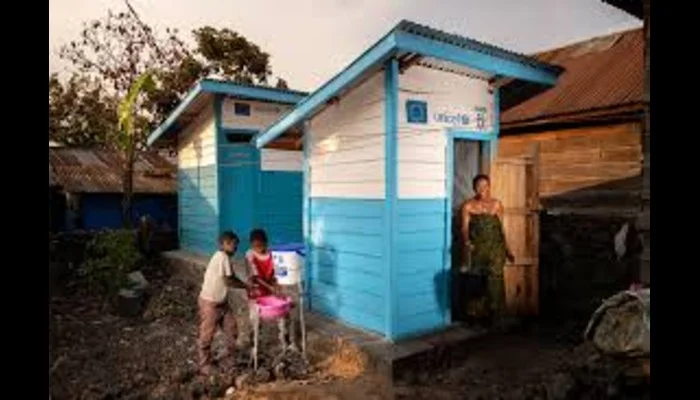
UNICEF Report has revealed 10 million toilets gap in Nigeria.
NewsOnline reports that Nigeria has the second-highest rate of open defecation globally, creating a massive sanitation gap that requires the construction of an estimated 10 million toilets, an untapped market valued at about $1 billion for toilet construction alone.
The disclosure was made by Jolly Ann Maulit, WASH Manager at UNICEF Nigeria, who highlighted the growing economic potential within the water, sanitation and hygiene (WASH) sector.
$1bn Toilet Construction Opportunity
According to Maulit, findings from a study conducted by the Toilet Board Coalition show that Nigeria’s “toilet economy” — spanning toilet construction, waste collection, and conversion of sludge into products such as manure, biogas and animal feed is already valued at over N12 billion.
ALSO: NASS Raises Presidential Campaign Spending Limit to N10bn Ahead of 2027 Elections
With Nigeria’s rising population, the market is projected to grow significantly, potentially reaching $15 billion over time.
Maulit noted that households are willing to spend between $35 and over $100 to install a toilet, translating into an estimated $1 billion market opportunity for household toilet construction alone. This estimate excludes sanitation facilities required in schools, healthcare centres, motor parks and markets, many of which can operate on a pay-per-use model.
56% of Water Facilities Non-Functional
Beyond toilet construction, Nigeria’s water infrastructure presents another major opportunity. Maulit revealed that about 56 percent of water facilities nationwide are currently non-functional.
This gap, she said, creates space for private operators to rehabilitate, repair and sustainably manage water systems under structured agreements with communities and state governments.
Local Entrepreneurs Driving Change
Maulit cited several examples of sanitation and water entrepreneurs already capitalising on these opportunities.
In Soko District, Dangushaniel Local Government Area, a private operator partnered with UNICEF and the state government to manage a pay-per-use water facility. Residents pay N10 per jerry can, with the scheme serving over 1,000 people and generating about N60,000 monthly.
In Bauchi State, a trained toilet business owner now constructs more than 55 household toilets monthly, employing full-time staff and engaging over 30 local masons. Similar sanitation enterprises are operating in Benue and Yobe States, employing dozens of workers and providing vocational training while generating steady income.
These initiatives demonstrate how small-scale sanitation businesses can simultaneously address public health challenges and create sustainable livelihoods.
Sanitation Finance Facility in the Works
To help scale these enterprises, UNICEF is working on an Africa-wide sanitation finance facility aimed at pooling funds from investors and donors. The initiative will de-risk loans for commercial and microfinance banks, enabling them to offer lower-cost financing to sanitation businesses and households.
The approach positions sanitation not only as a public health priority but also as a growing economic frontier capable of generating jobs, improving infrastructure, and supporting Nigeria’s broader development goals.