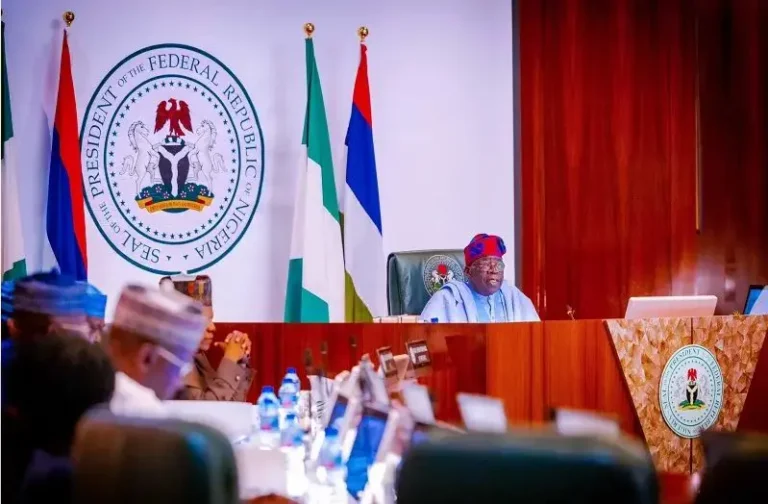
As President Bola Ahmed Tinubu marks two years in office today, the nation reflects on an administration defined by bold reforms and economic overhauls, changes that have left Northern Nigeria at a critical juncture.
Across the North, from Kano to Katsina; the impact of these reforms is sharply divided. While some commend the administration’s decisive policies as necessary steps toward national progress, many others decry the resulting economic strain and growing regional disparities.
One of Tinubu’s earliest and most impactful decisions came on day one: the removal of the fuel subsidy. Though long debated and partially prepared by the Buhari administration, the abrupt execution triggered immediate economic turmoil.
Muhammad Taoheed, a researcher in Abuja, described the aftermath as “devastating.”
“The prices of essentials have skyrocketed. Transport alone gulps so much of my income despite the fact that I work virtually sometimes. It’s not just me—millions of Nigerians are in the same sinking boat.”
Despite government interventions such as palliatives and social programs, the relief has fallen short for many.
Kano-based businesswoman Hajara Abdullahi shared her frustration:
“The hardship keeps biting harder because the government has failed to provide a concrete and effective measure to cushion the effects.”
The economic downturn has especially hit the North’s small and medium-scale enterprises. Rising fuel costs, forex instability, and unreliable power supply have forced many businesses to shut down or cut staff.
Ahmad Bello, once a leather factory worker in Kano, lost his job when the company downsized.
“Our Oga said he couldn’t afford to keep all of us. He kept the old staff and fired us – new workers. Now, I do odd jobs to survive. Life has become something else.”
His story echoes a larger trend across northern states, where unemployment and underemployment are on the rise.
For some, the dissatisfaction goes beyond economic woes. Muhammad Tukur Ibrahim, a political analyst, believes the North has been politically sidelined.
“We saw oil exploration efforts in the North under Buhari. Tinubu came in and started well, but now that project is dead. Why? Because it’s not in the South. This government plays favoritism.”
Concerns over the concentration of federal infrastructure projects and appointments in the South have also been raised by several Northern political figures.
Yet, not all perspectives are critical. Baba Abdullahi Machina from Yobe sees progress.
“Increasing the minimum wage to ₦70,000 is bold and commendable. It’s a clear attempt to adjust to the new cost of living.”
He also praised reforms like local government financial autonomy and the rollout of the Student Loan Scheme, calling it a potential game-changer for low-income families—provided it’s implemented transparently.
Kano-based social commentator Aminu Abdullahi acknowledged both the efforts and shortcomings.
“There’s potential in the 3MTT program and other youth initiatives. But the impact has been uneven. Many rural communities are still excluded.”
He warned that without transparency and equitable access, even well-intended policies could worsen inequality.
Insecurity remains a pressing issue. While the government touts increased defense spending and military upgrades, large swathes of the North especially the Northeast has remain volatile.
Umar Rufai in Katsina noted:
“We hear about new fighter jets and tactical operations, but in rural areas, farmers still pay bandits to access their land. Kidnapping remains rampant, especially in border communities.”
As the President presents his mid-term scorecard, voices from the North like Ahmad Bello urge a more inclusive and empathetic approach:
“We want the government to impact our lives positively—not make every day a struggle. Decisions should lift the people, not push them further down.”
With two more years ahead, Nigerians across all regions are watching closely, hoping the next phase of Tinubu’s administration will deliver not just reforms, but tangible relief and renewed unity.
Boko Haram Terrorists has attacked Chibok Community and set houses ablaze. NewsOnline Nigeria reports…
NASU and SSANU has commenced nationwide strike over unresolved allowance dispute. NewsOnline Nigeria reports…
President Tinubu has appointed Rilwan Babalola as Special Adviser on Power and set up Presidential…
Supreme court has restored David Mark as ADC National Chairman and voided appeal court order.…
Supreme court has voided PDP Ibadan convention and nullified Turaki-led factional executives. NewsOnline Nigeria…
Let’s stop pretending: what Nigeria practices today hardly reflects the true essence of democracy. Instead,…