Google and African Universities have launched WAXAL to empower 100 million Africans with AI Voice Technology.
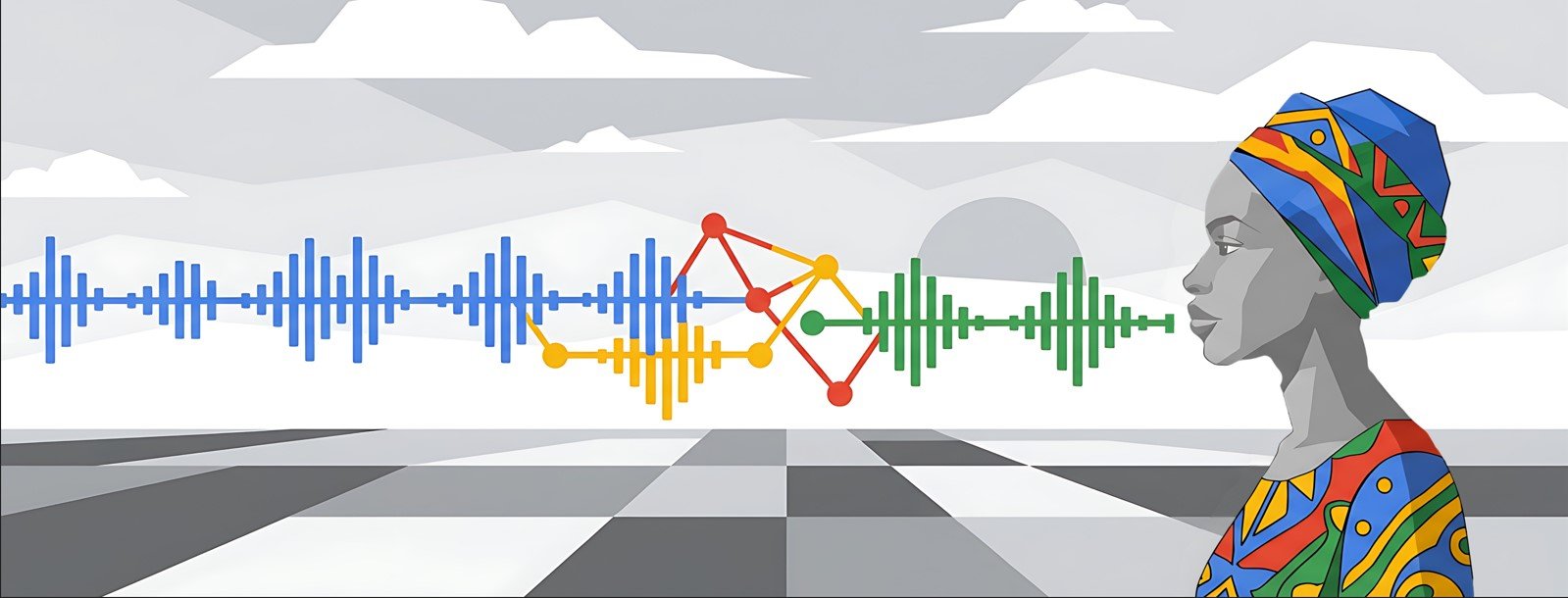
NewsOnline Nigeria reports that Google, in partnership with leading African research institutions, has unveiled WAXAL, a large-scale, openly accessible speech dataset aimed at expanding AI access across Africa. Designed to serve over 100 million speakers, WAXAL provides foundational data for 21 Sub-Saharan African languages, including Hausa, Yoruba, Luganda, and Acholi, enabling voice-enabled technologies previously unavailable to most Africans.
Despite the global rise of voice technology, the lack of high-quality speech data for Africa’s 2,000+ languages has excluded millions from using digital tools in their native tongues. WAXAL addresses this gap, offering 1,250 hours of transcribed natural speech and over 20 hours of high-quality studio recordings suitable for creating high-fidelity synthetic voices.
ALSO: Google Search Trends Show Nigerians Embrace Self-Improvement, Entrepreneurship, and Wellness in Early 2026
Aisha Walcott-Bryantt, Head of Google Research Africa, emphasized the project’s impact:
“WAXAL empowers people in Africa. It gives students, researchers, and entrepreneurs the foundation to build technology on their own terms, in their own languages, reaching over 100 million people. We look forward to seeing African innovators create educational tools, voice-enabled services, and new economic opportunities using this dataset.”
Crucially, the project was built by and for African communities. Makerere University (Uganda), the University of Ghana, and Digital Umuganda (Rwanda) led data collection, guided by Google experts. Partner institutions retain full ownership of the dataset, establishing a model for equitable AI development across the continent.
The WAXAL dataset currently supports the following languages: Acholi, Akan, Dagaare, Dagbani, Dholuo, Ewe, Fante, Fulani (Fula), Hausa, Igbo, Ikposo (Kposo), Kikuyu, Lingala, Luganda, Malagasy, Masaaba, Nyankole, Rukiga, Shona, Soga (Lusoga), Swahili, and Yoruba.
The dataset is now publicly available, offering African developers, researchers, and startups the tools to create inclusive, locally relevant AI applications. For more details, visit the Google Africa blog