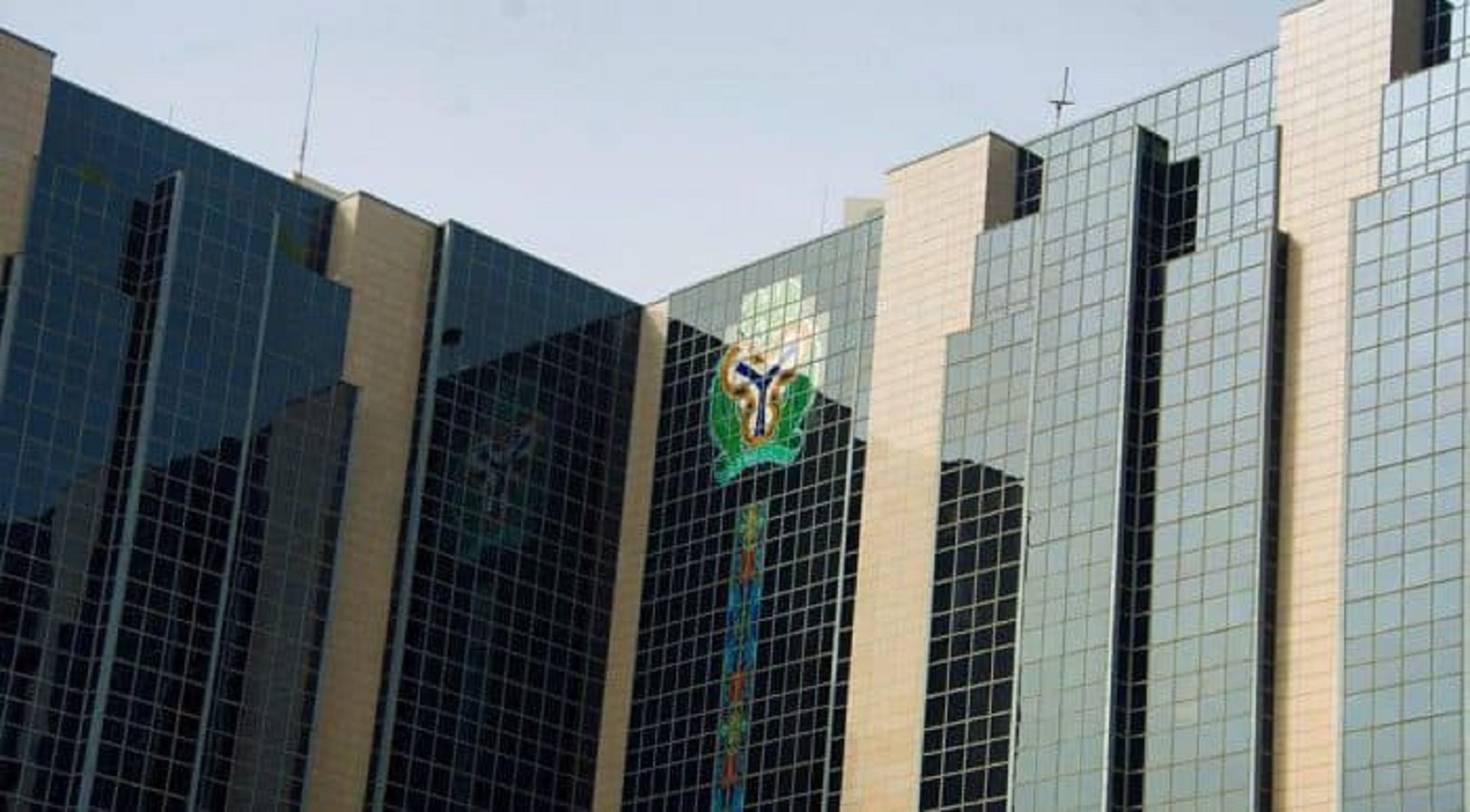
CBN has been named as the Global Central Bank of the Year 2026 for sweeping eonomic reforms.
NewsOnline Nigeria reports that the Central Bank of Nigeria (CBN) has been named the Global “Central Bank of the Year” at the 2026 Central Banking Awards, following a series of sweeping monetary and structural reforms aimed at stabilising Nigeria’s economy after years of policy distortions.
According to a statement from the awards committee obtained by NewsOnline on Sunday, the recognition highlights the apex bank’s decisive policy reset and institutional reforms, which have helped restore confidence in Nigeria’s financial system and strengthen macroeconomic stability.
The committee noted that the reforms marked a return to orthodox monetary policy, improved governance, and renewed investor confidence in the country’s financial markets.
ALSO: 2027 Elections: Ministers, Political Appointees Weigh Options as Tinubu’s Resignation Directive Sparks Uncertainty
Prior to the reforms, Nigeria’s economy had faced significant challenges, including rising inflation, weakening foreign exchange reserves, and a wide gap between official and parallel market exchange rates.
By 2023, inflation had climbed to 22.4 per cent, while foreign exchange liquidity had deteriorated sharply, with an estimated $7 billion backlog in unmet obligations and a spread of more than 60 per cent between official and parallel market rates.
Economic stagnation and inconsistent policies also saw Nigeria fall from Africa’s largest economy in 2014 to fourth place behind South Africa, Egypt, and Algeria.
However, following the appointment of Olayemi Cardoso as CBN Governor in October 2023, the bank introduced wide-ranging reforms aimed at restoring macroeconomic stability and strengthening institutional credibility.
The committee stated that the new leadership prioritised ending quasi-fiscal interventions, tightening monetary policy, clearing foreign exchange backlogs, and reinforcing the independence of the central bank.
A major element of the reforms was the overhaul of the foreign exchange market. The CBN replaced multiple exchange rate windows with a unified, market-driven system based on a willing-buyer, willing-seller model, while also introducing an electronic FX matching platform to enhance transparency and price discovery.
According to Cardoso, the reforms have significantly improved currency stability.
“The naira now trades within a narrow, stable range. The once-substantial gap between the official and parallel markets has shrunk to under two per cent, down from over 60 per cent,” he said.
The apex bank also cleared outstanding foreign exchange obligations owed to sectors including aviation and manufacturing, helping to restore business confidence and market liquidity.
As a result of improved FX inflows, increased non-oil exports, and stronger capital inflows, Nigeria’s external reserves rose to $46.7 billion by November 2025, the highest level in nearly seven years and sufficient to cover more than ten months of imports.
The International Monetary Fund (IMF), in its July 2025 Article IV assessment, commended the reforms, noting that the policy changes had strengthened market confidence and improved foreign exchange liquidity.
To curb inflation, the CBN also implemented aggressive monetary tightening, raising interest rates from 18.75 per cent in 2023 to 27.5 per cent by November 2024.
Although inflation initially surged to 34.80 per cent in December 2024 following subsidy removal and currency liberalisation, it later declined significantly to 15.10 per cent by January 2026, while food inflation dropped to 8.9 per cent.
With inflation gradually easing, the apex bank began a cautious policy easing cycle, reducing the benchmark interest rate to 26.5 per cent by February 2026.
Cardoso emphasised that the bank remains committed to further reducing inflation, noting that the current double-digit rate remains unacceptable and that the CBN is working towards a full inflation-targeting framework supported by stronger data systems and communication tools.
Beyond monetary policy, the committee also highlighted structural reforms in the banking sector, including the introduction of a major recapitalisation programme in 2024 requiring banks to meet higher capital thresholds.
More than 33 banks have raised fresh capital, with at least 20 institutions already meeting the new requirements ahead of the March 31, 2026 deadline. Banks that fail to comply risk licence downgrades, mergers, or liquidation.
The CBN also strengthened supervision by transitioning towards Basel III standards to improve risk management and liquidity monitoring across the banking system.
Financial inclusion also expanded during the reform period, with microfinance lending growing by more than 14 per cent, while digital credit products reached over 1.2 million small businesses in 2025.
In the payments sector, the apex bank introduced reforms to improve cash management, enhance ATM efficiency, and strengthen oversight of payment agents nationwide.
More than 12 million contactless cards are now in circulation, while about 40 fintech firms are participating in the CBN’s regulatory sandbox programme.
Governance reforms were also introduced, including the establishment of a dedicated compliance department and stronger anti-money laundering controls, which contributed to Nigeria’s removal from the Financial Action Task Force grey list in 2025.
International rating agencies also acknowledged the impact of the reforms. Fitch Ratings upgraded Nigeria’s credit rating from B- to B with a stable outlook in April 2025, while Moody’s raised its rating from Caa1 to B3 in May, citing improved policy credibility and economic fundamentals.
Nigeria also returned to the international capital market in 2025 with a $2.35 billion Eurobond issuance, which was oversubscribed more than five times by global investors.
Despite the progress, the awards committee noted that challenges remain, including sustaining disinflation, completing the banking sector recapitalisation programme, and strengthening institutional frameworks.
However, it concluded that the scale and impact of the reforms undertaken by the CBN have been significant.
“What the CBN has achieved is nothing short of remarkable,” a former central bank official was quoted as saying.